Product Design

BYTEY - Lists & Faves

This feature reimagined a standard “save/favorite” pattern into a smarter, AI-supported system for organizing and rediscovering restaurants. What began as a simple bookmark function evolved into a lightweight mobile experience where AI helps structure saved content, while users still keep meaningful control.

Smarter saving

Transformed a passive “heart to save” feature into a smarter system for saving, filtering, and rediscovering restaurants

Flexible organization

Introduced a tag based system (AI-generated tags, user-created tags, and tag groups) with AI-curated lists to support both everyday and power users

Mobile-first simplicity

Focused on balancing intelligence and simplicity on mobile, without turning a casual feature into a heavy management tool

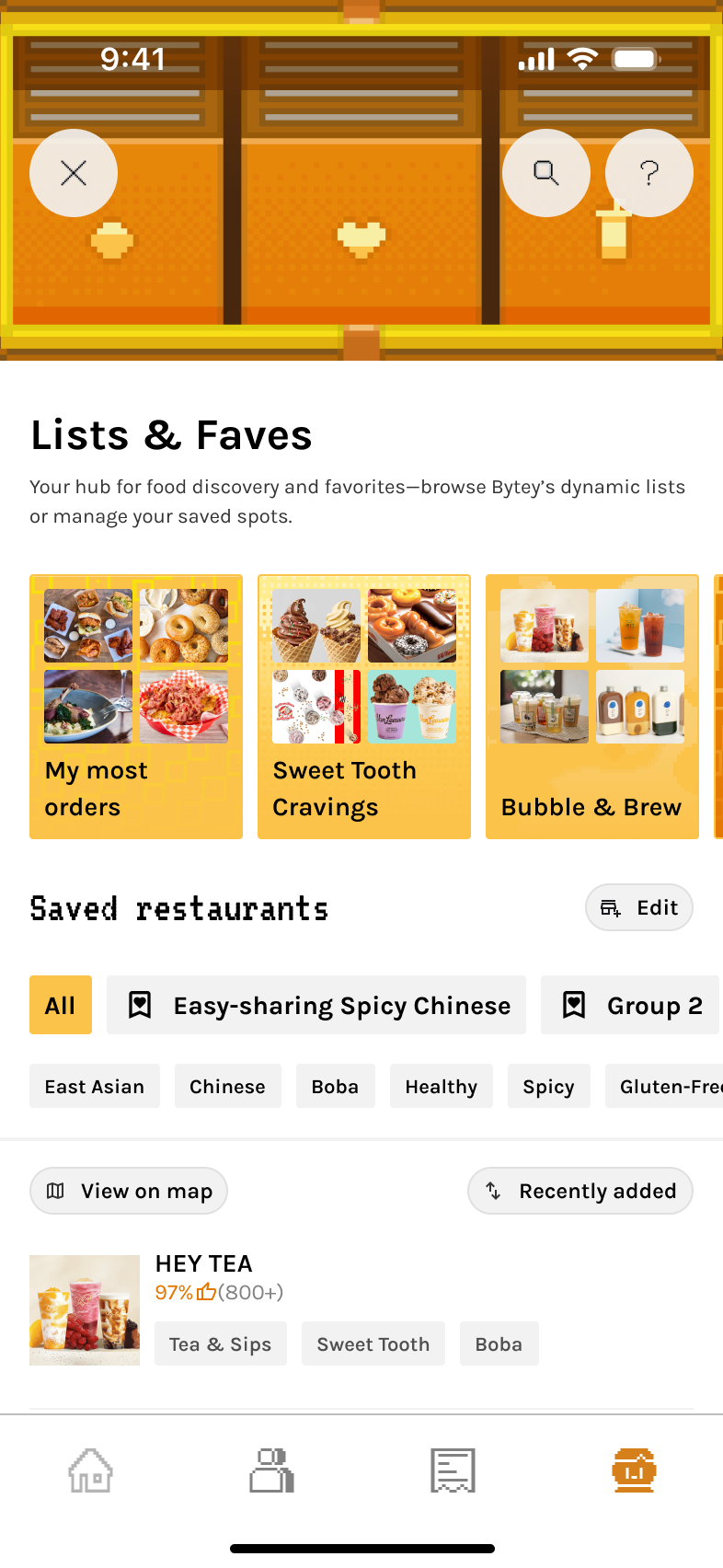
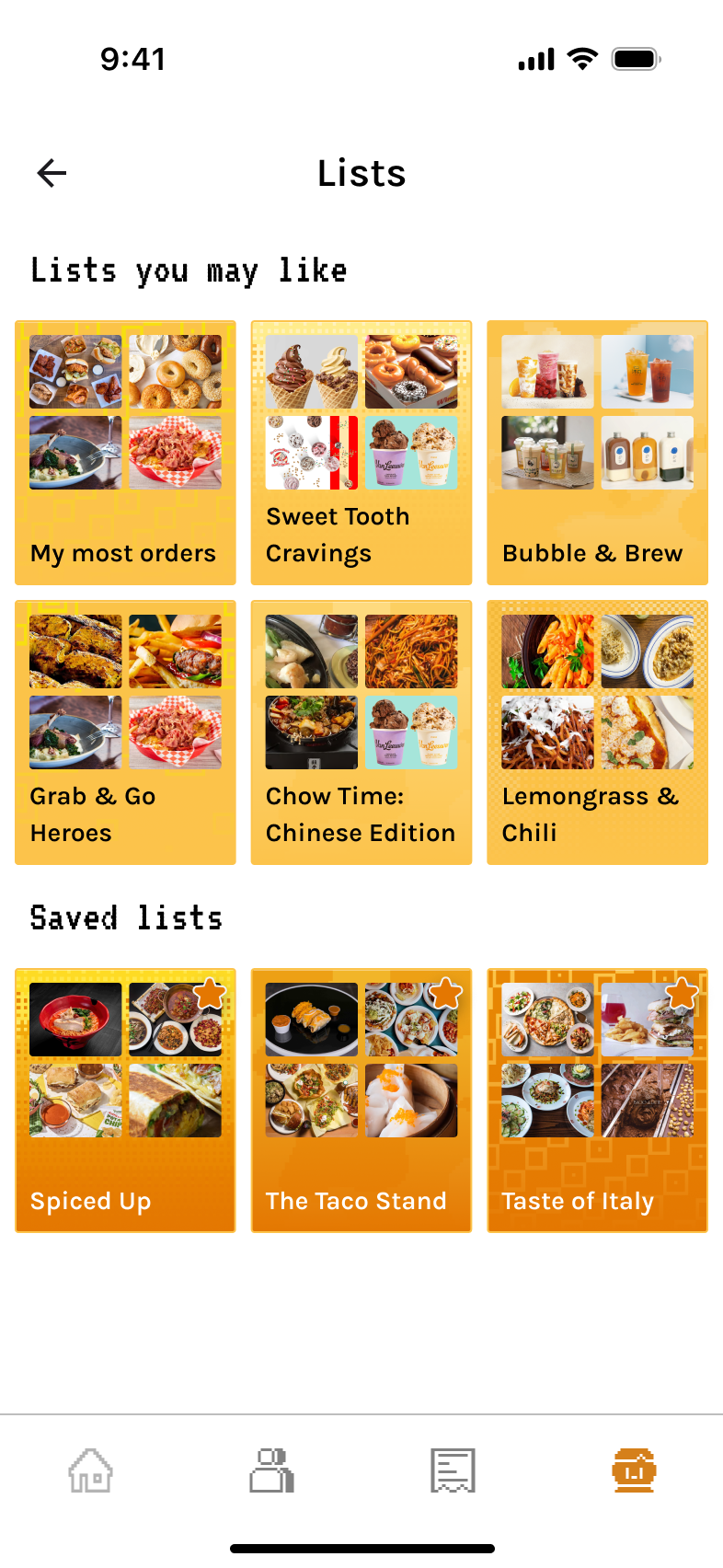
Lists & Faves home

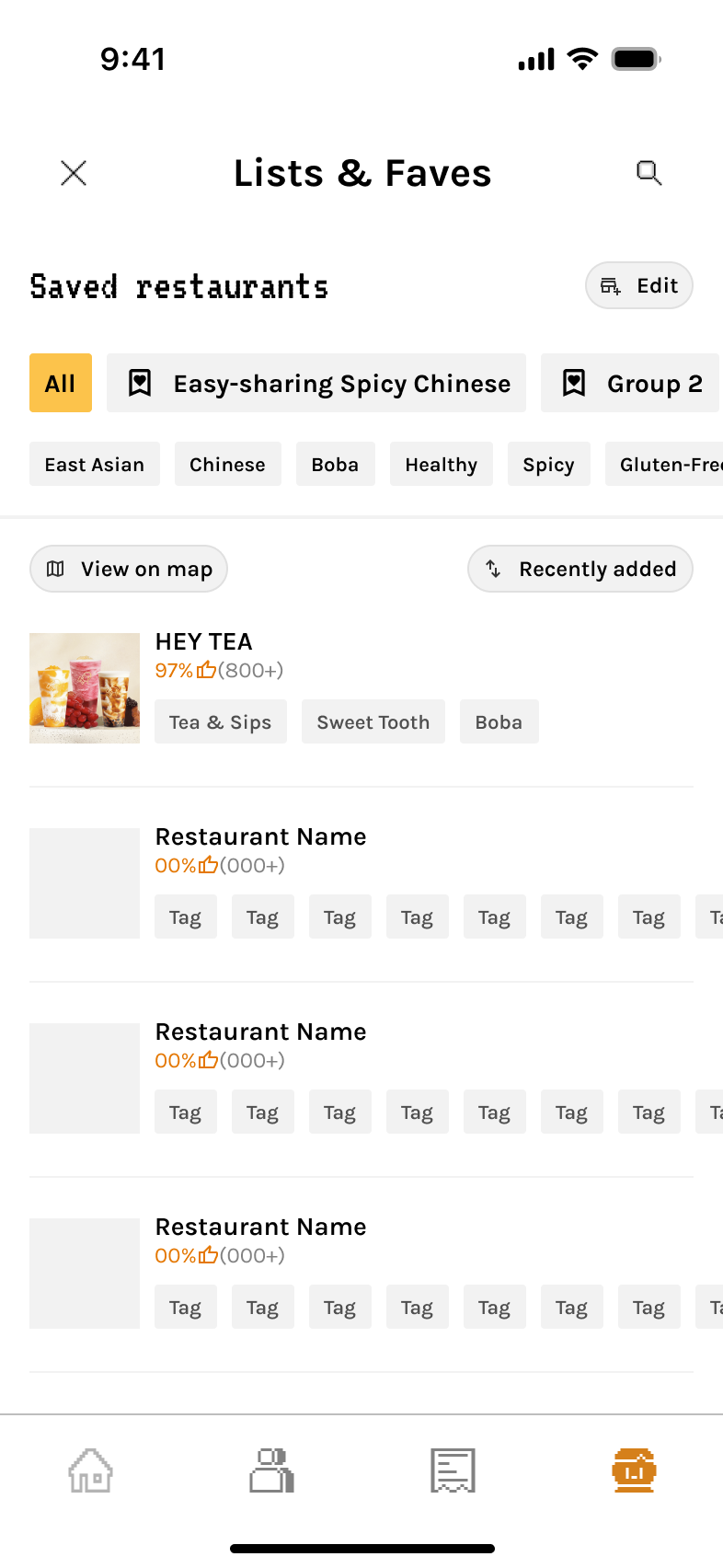
Lists & Faves scrolled

Show all lists

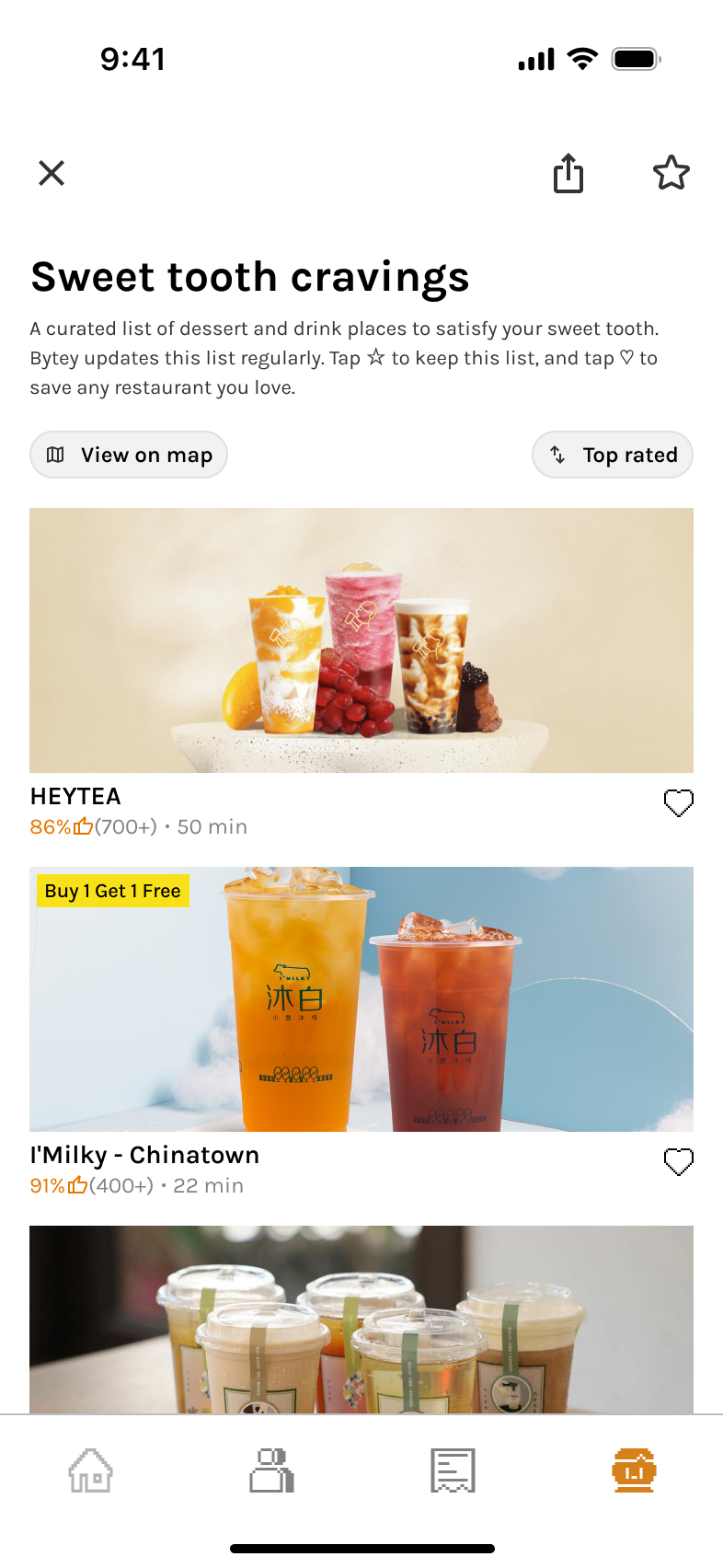
View list

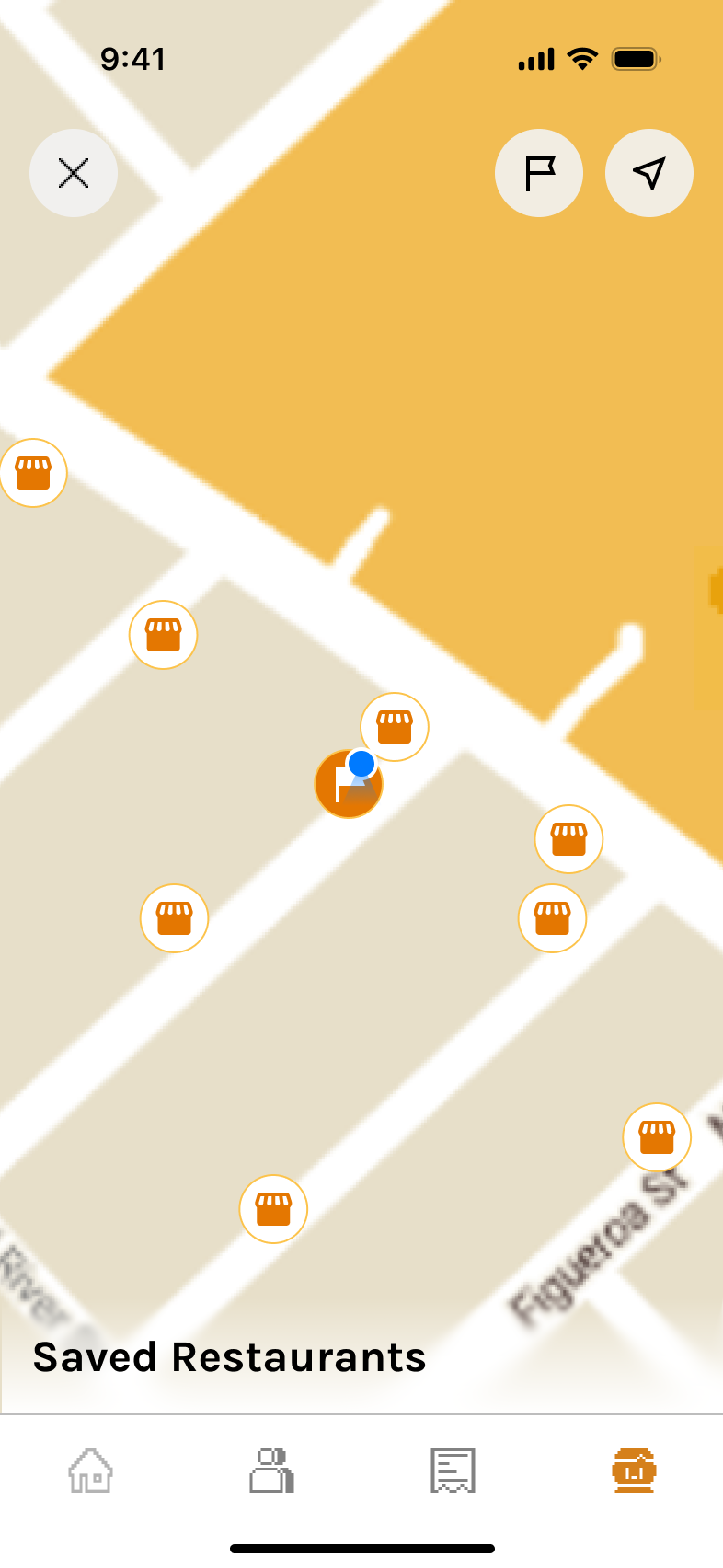
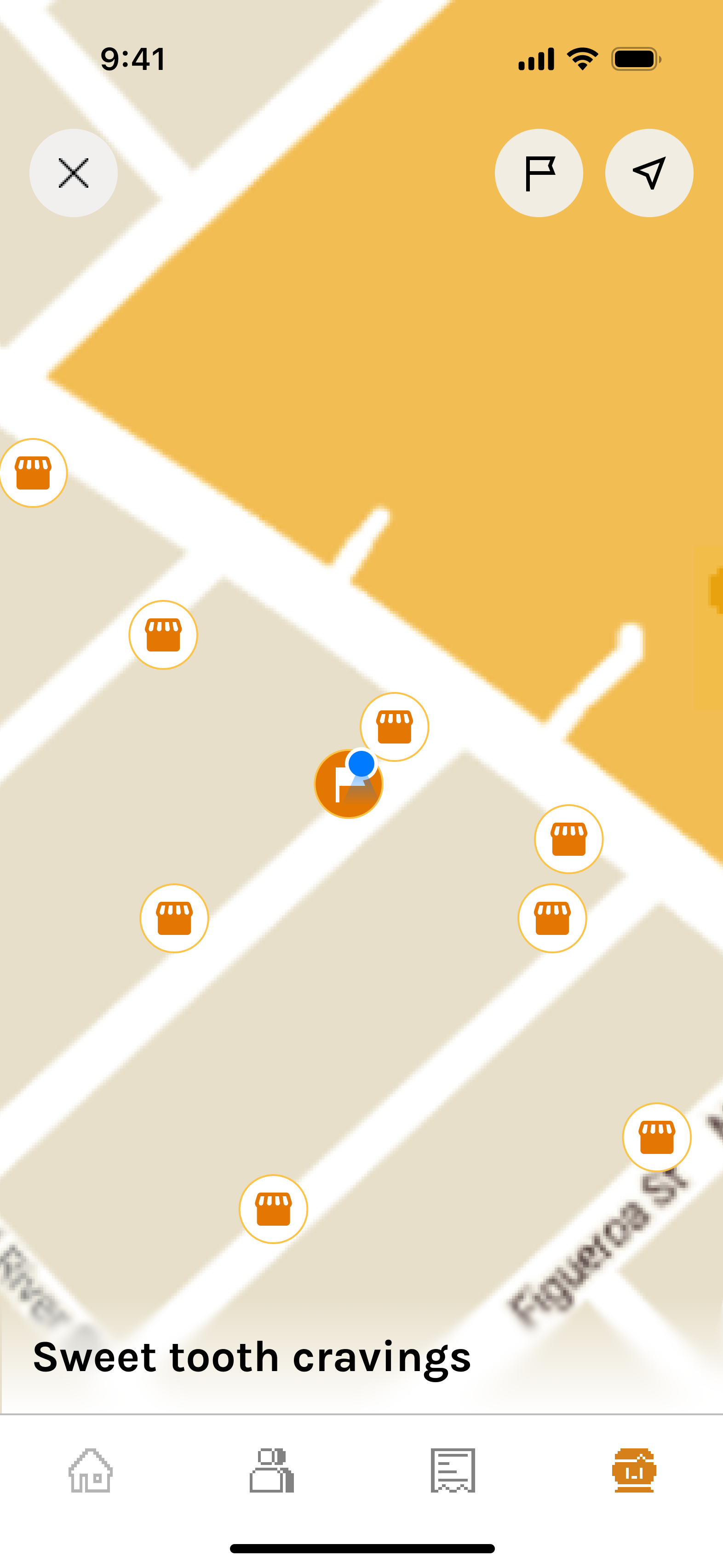
Map view

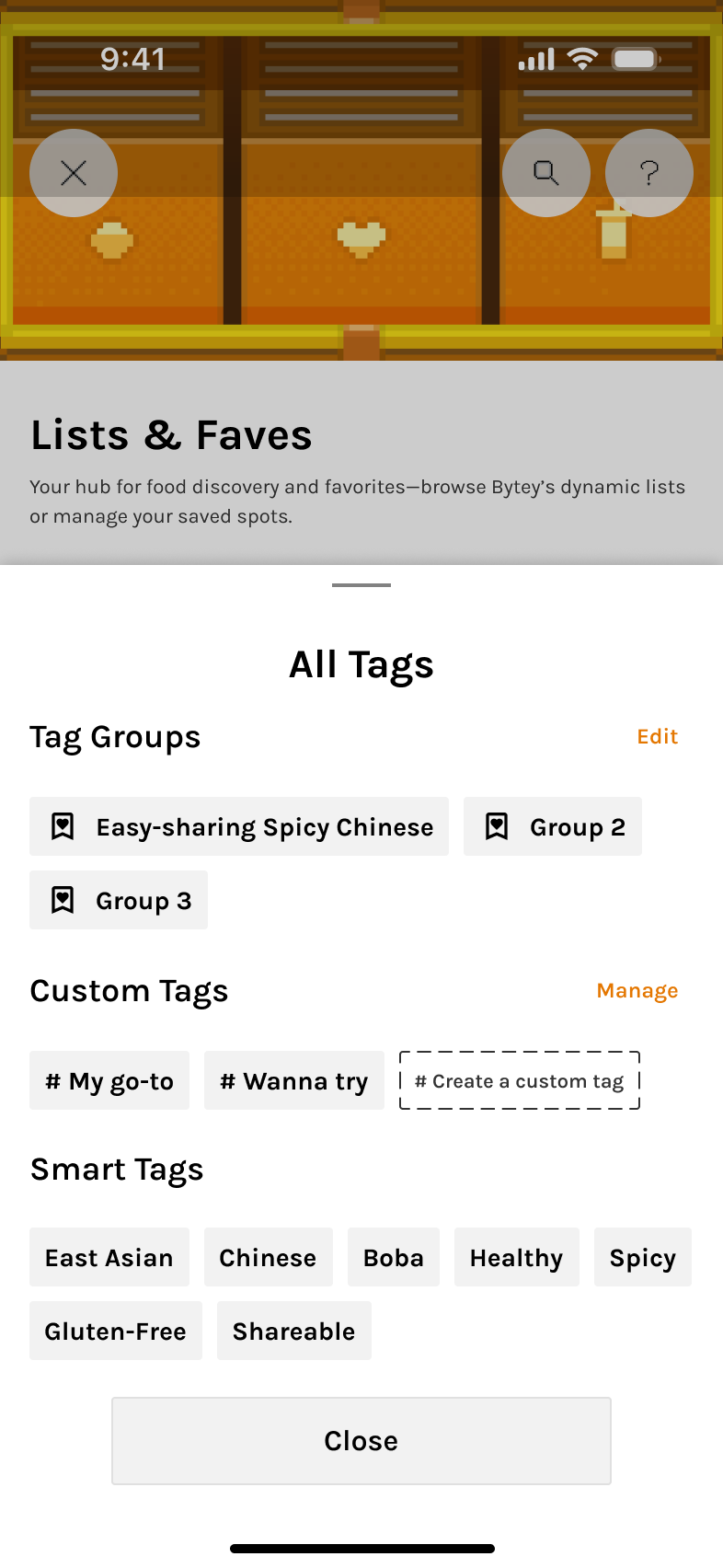
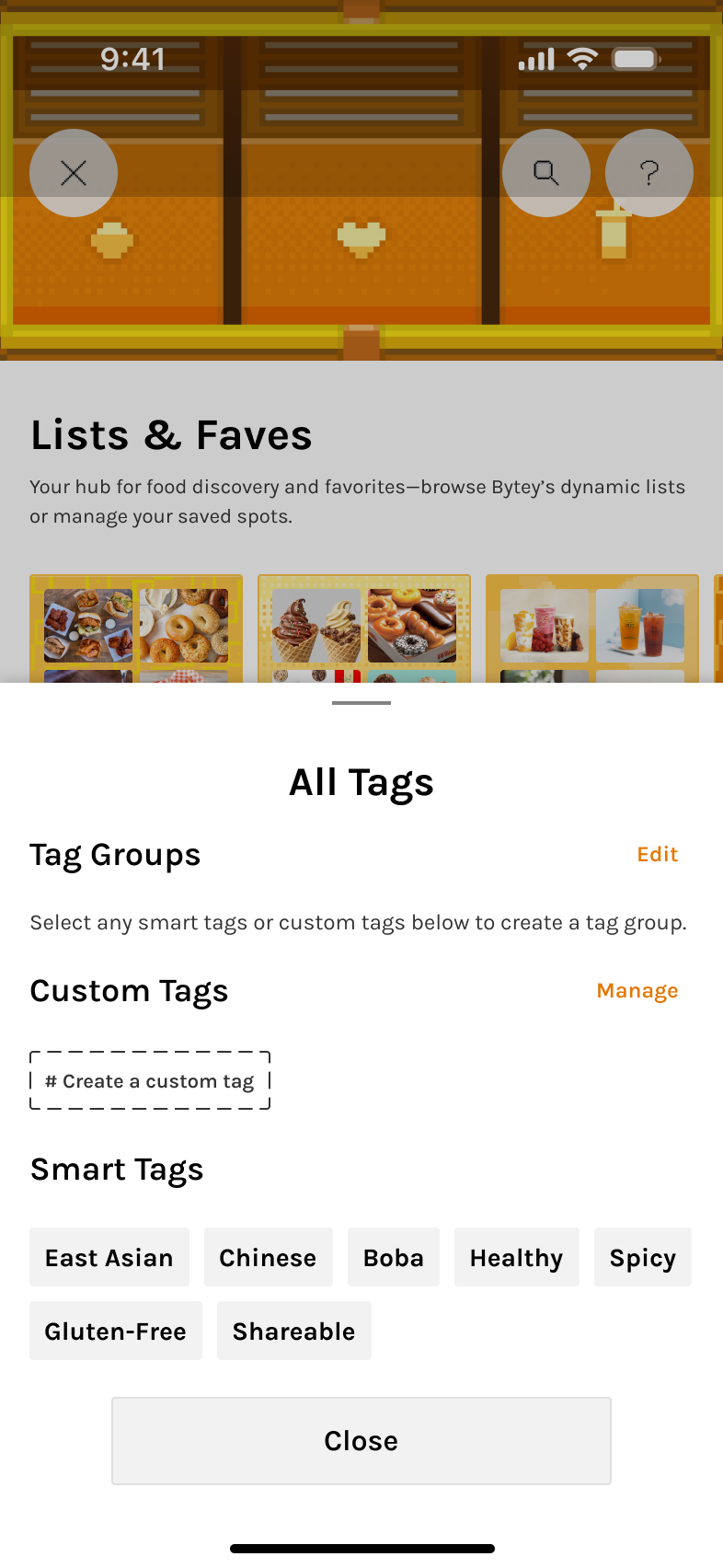
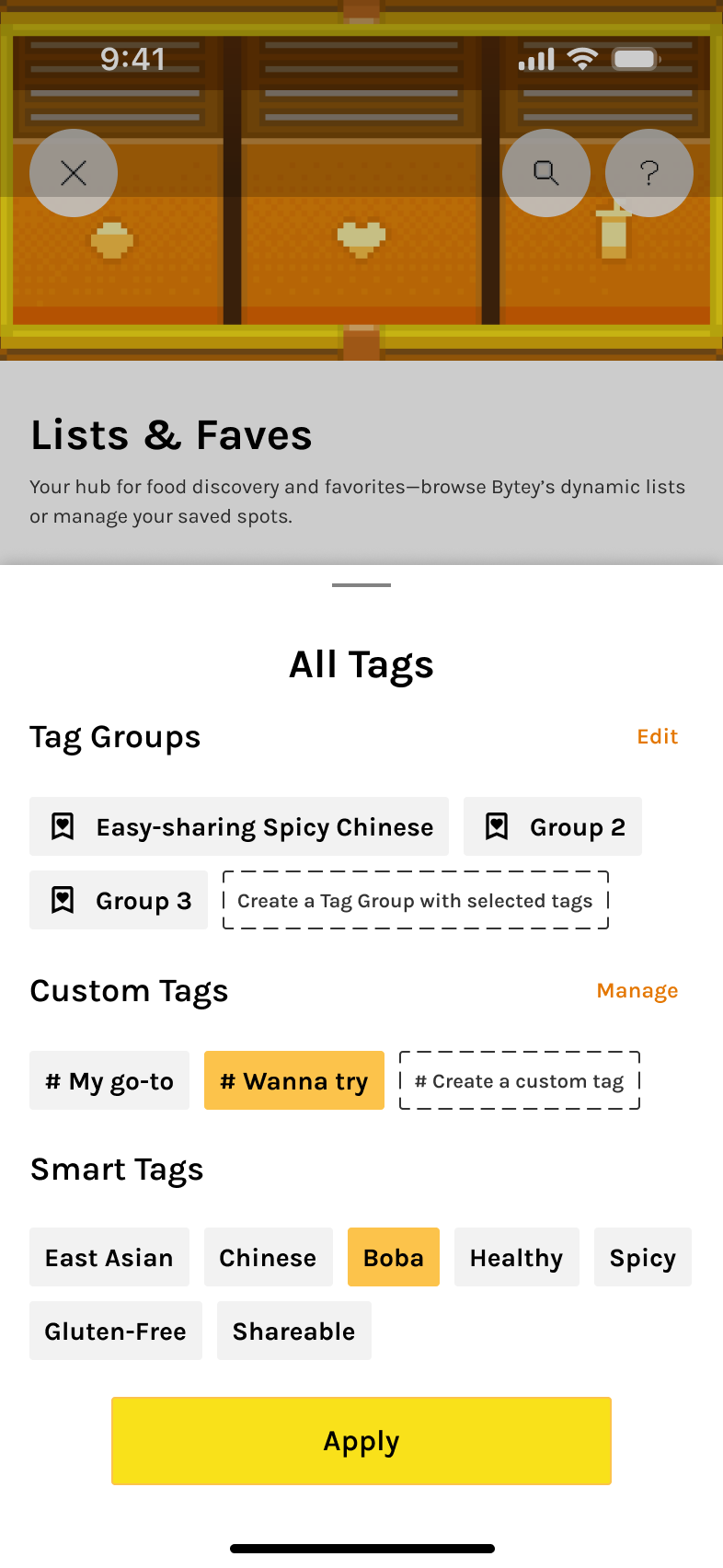
Show all tags

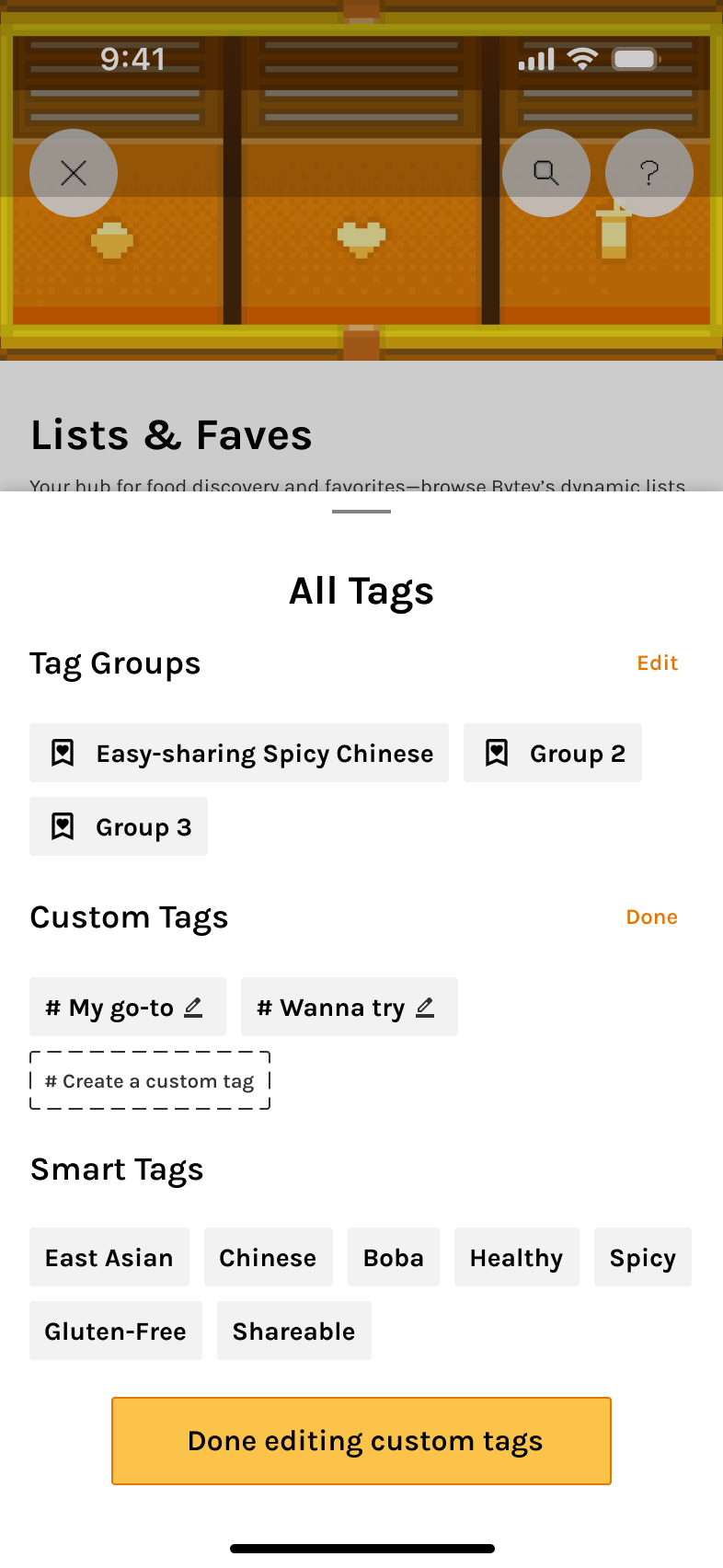
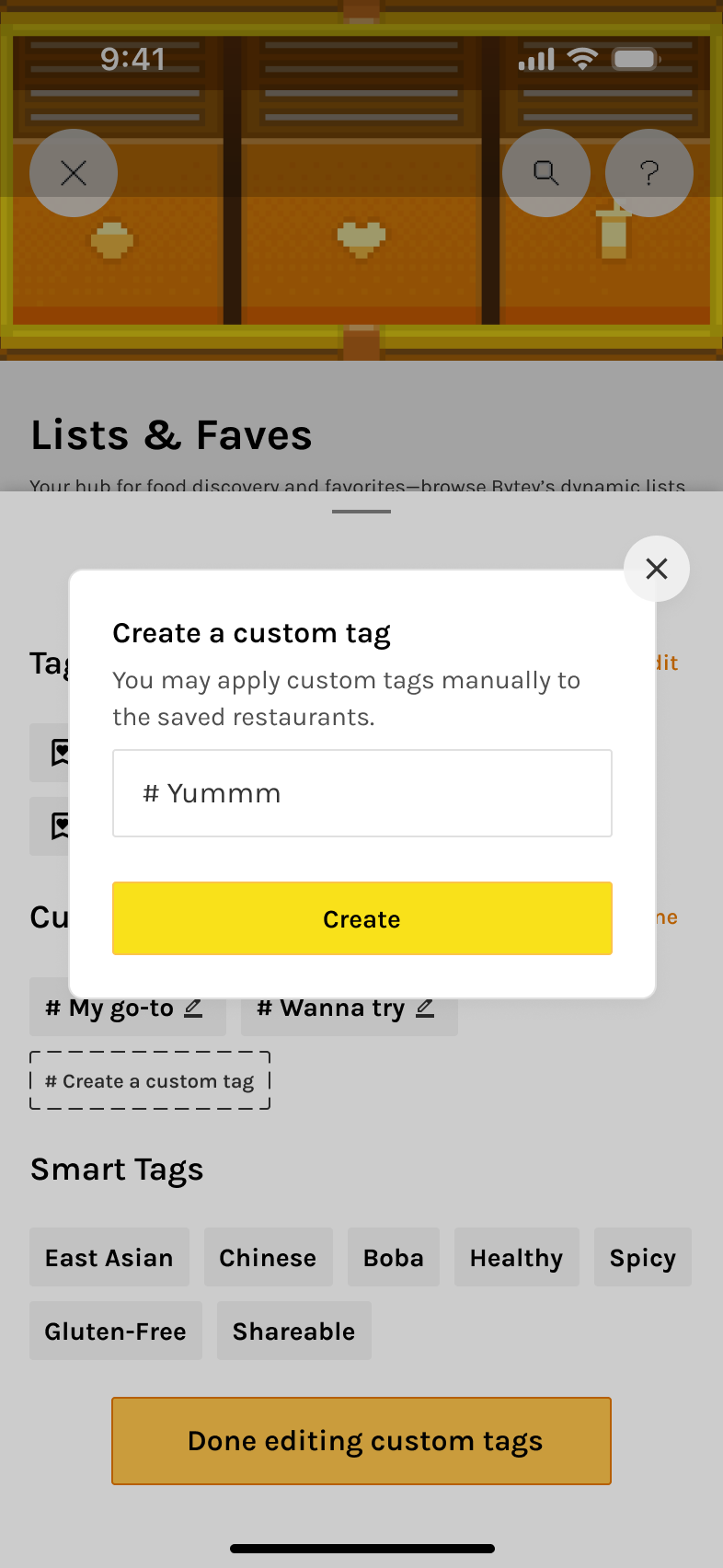
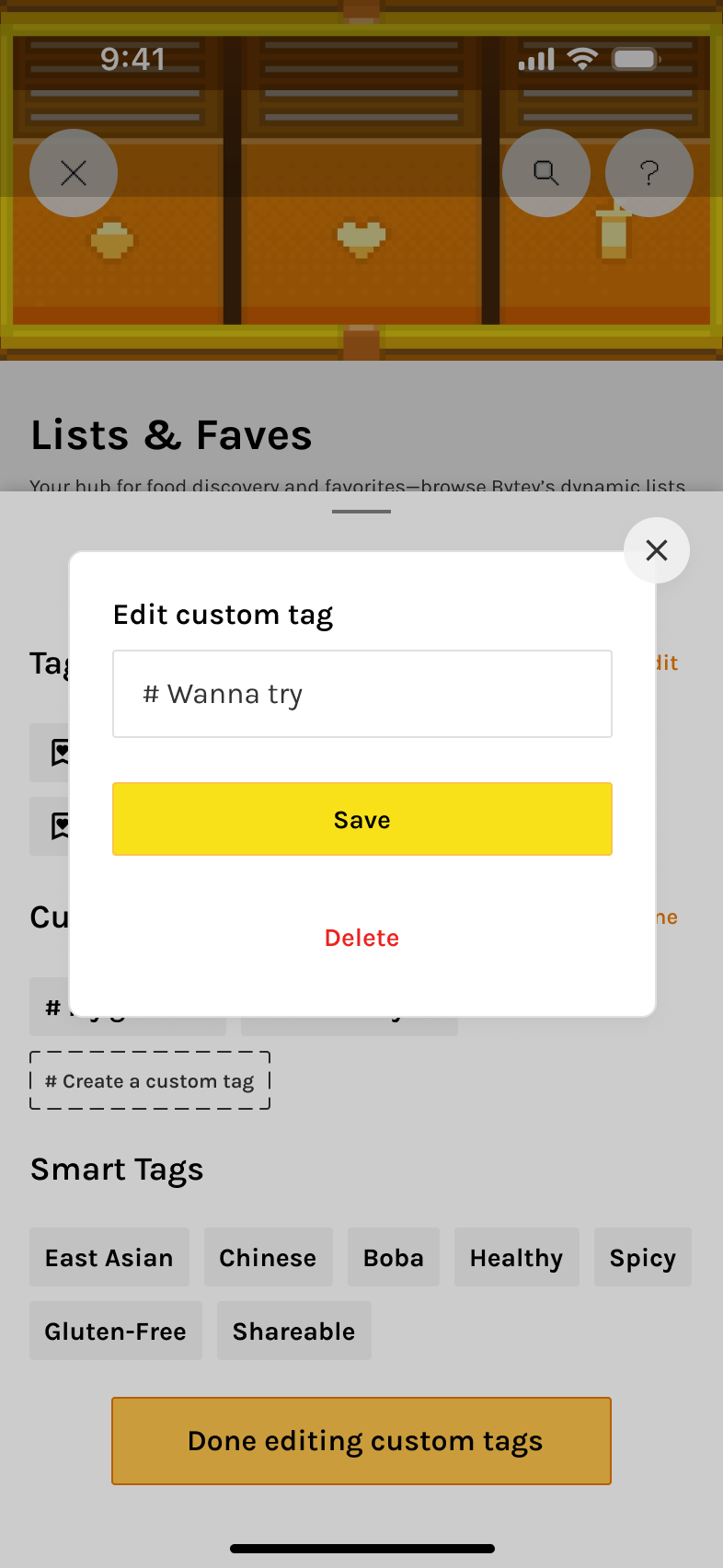
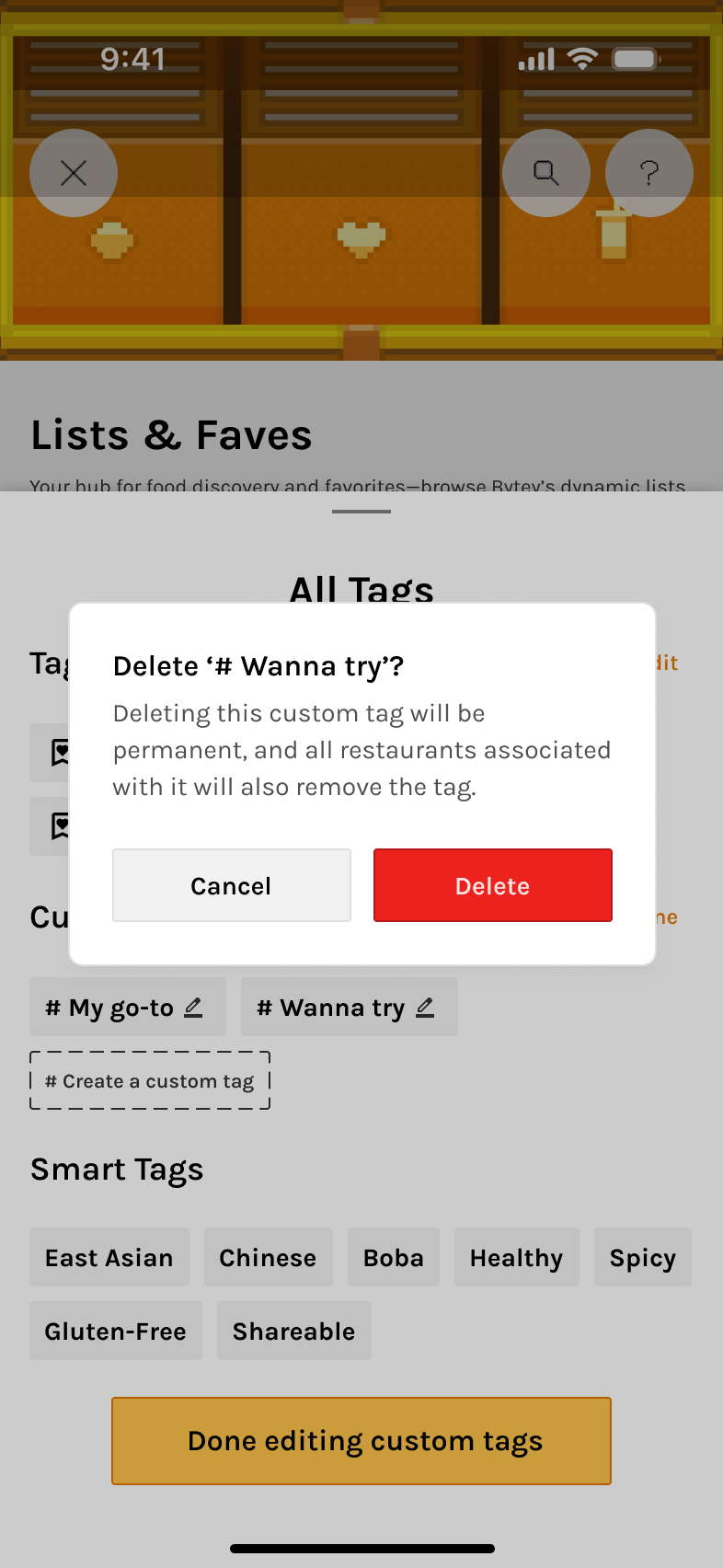
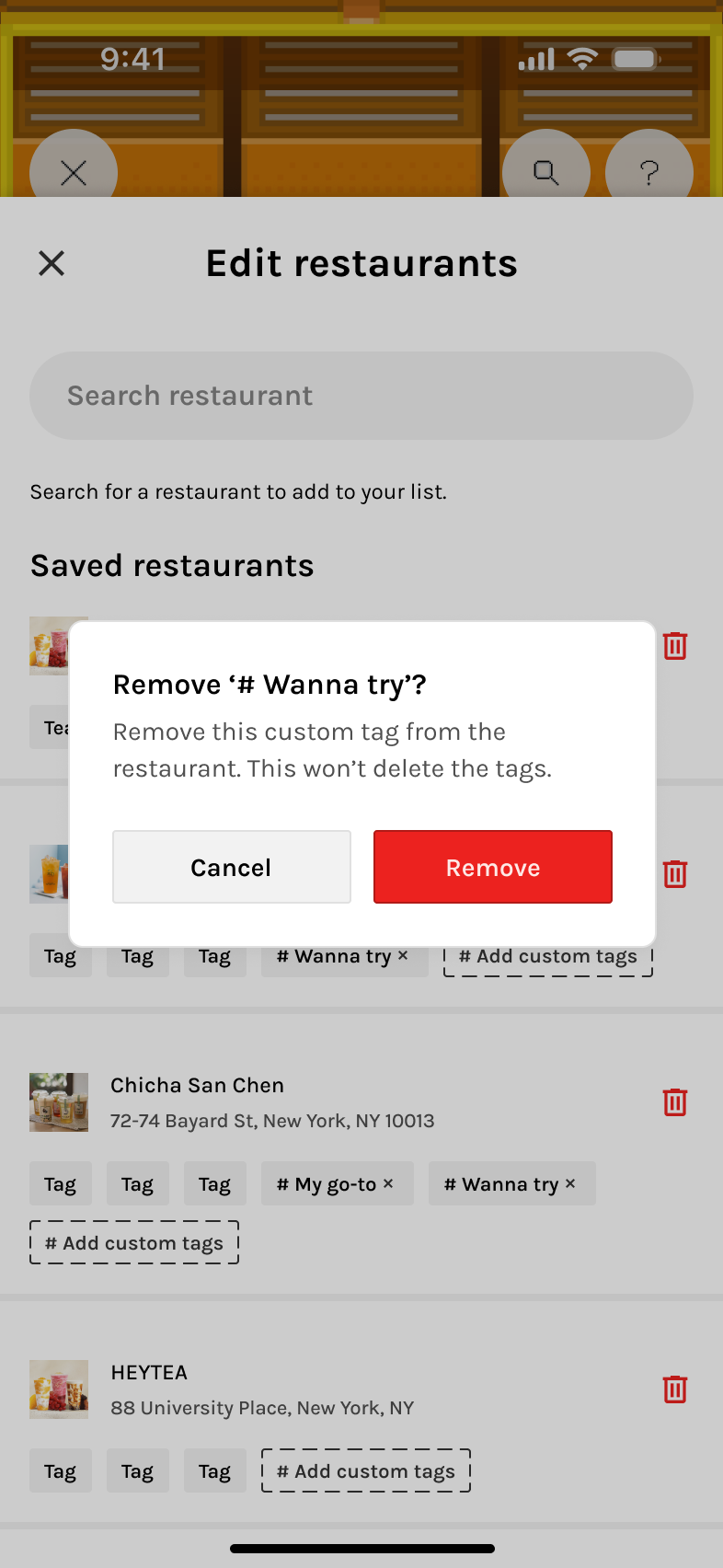
Manage custom tags

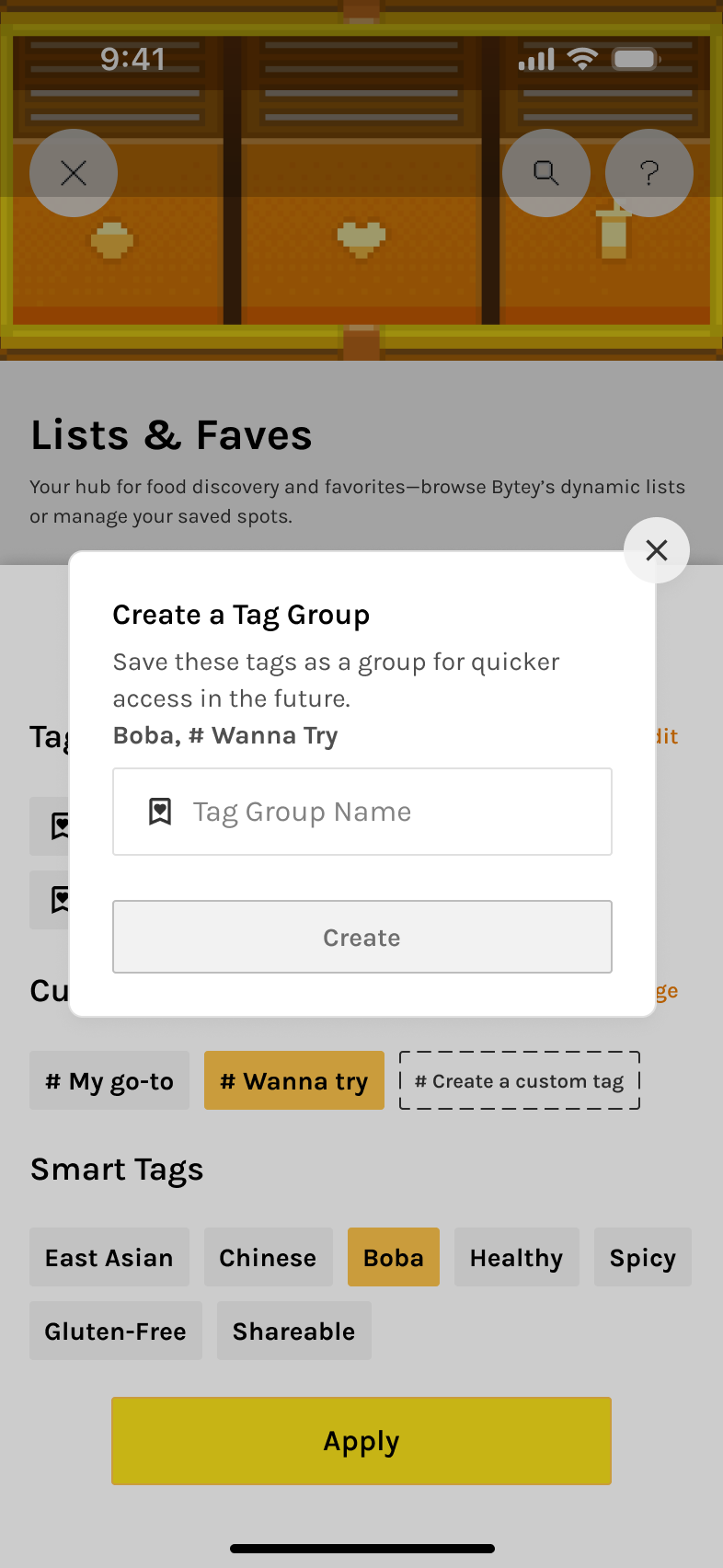
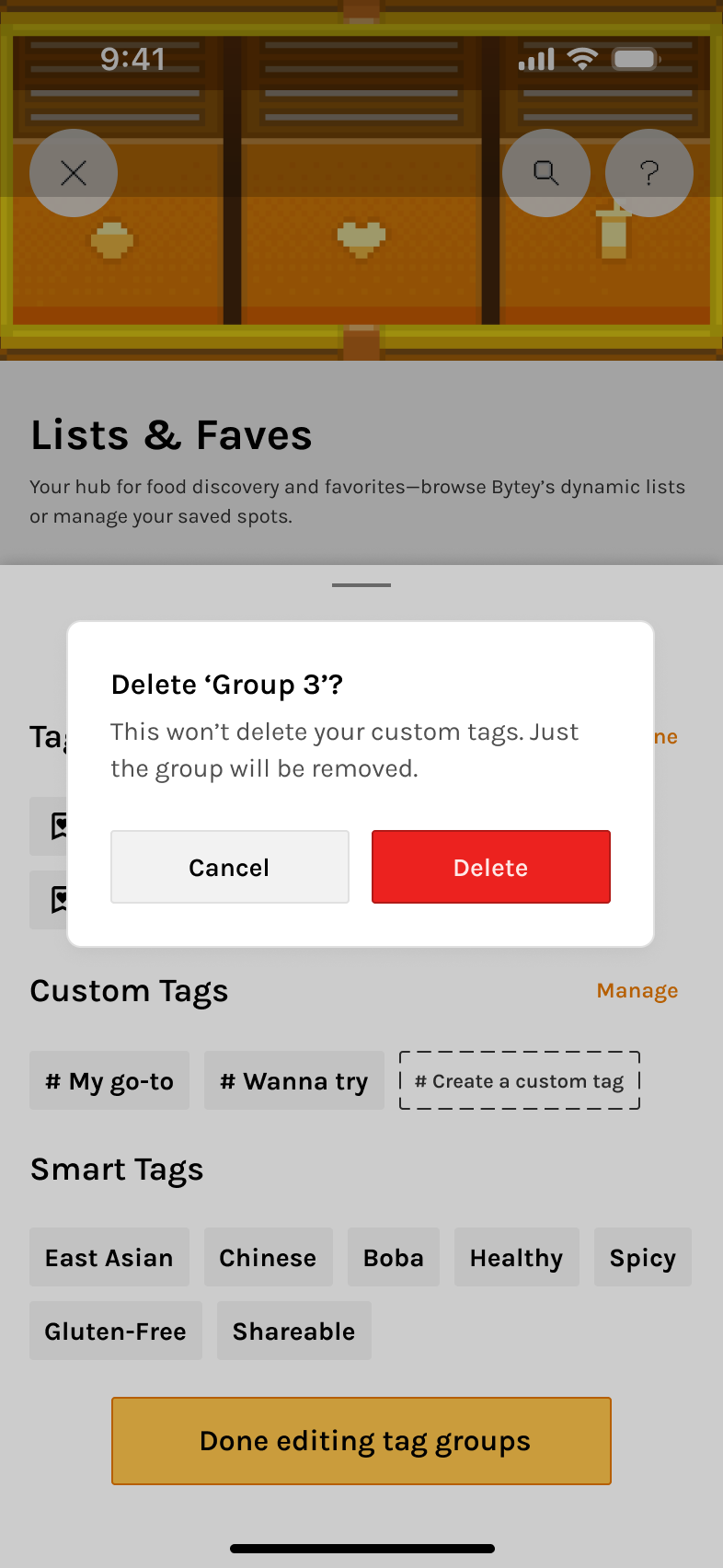
Create/edit tag groups

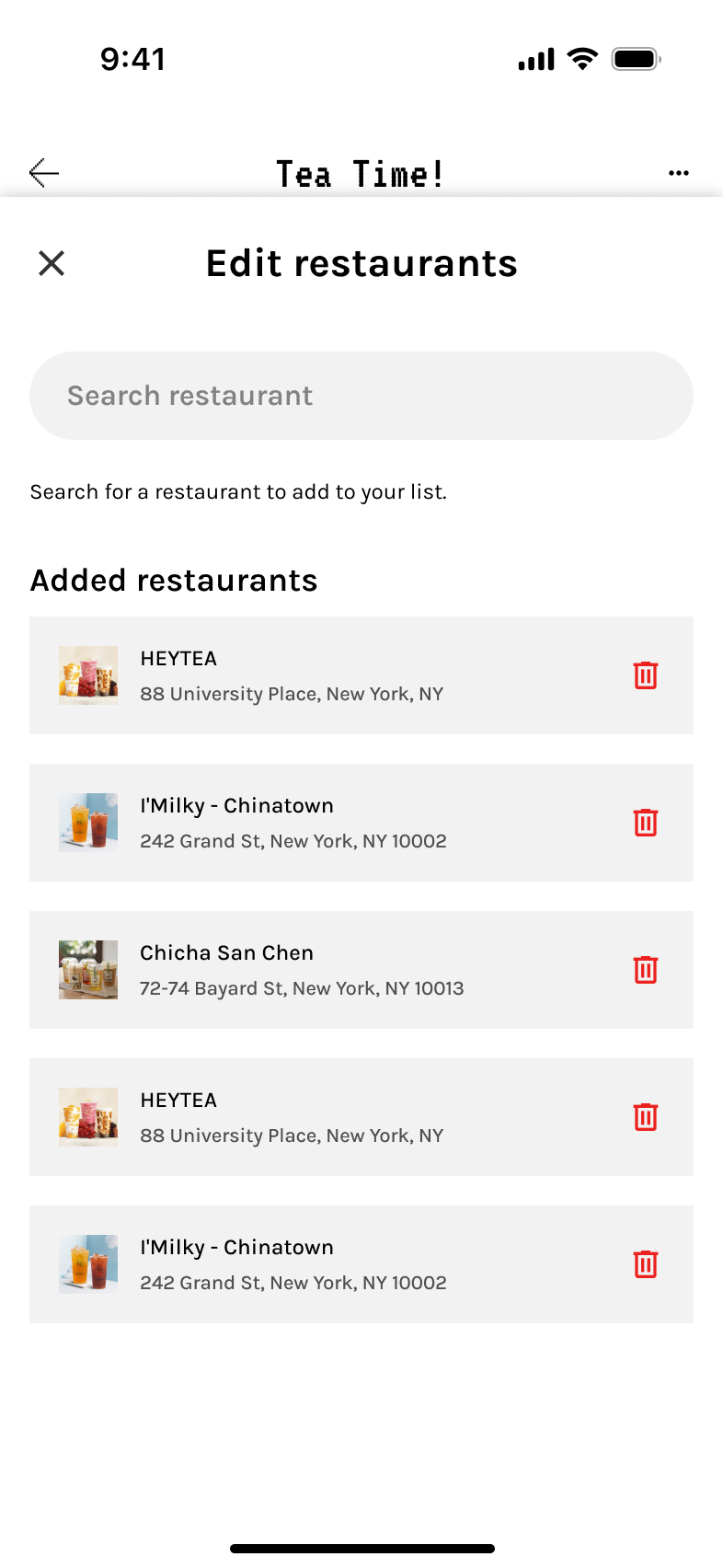
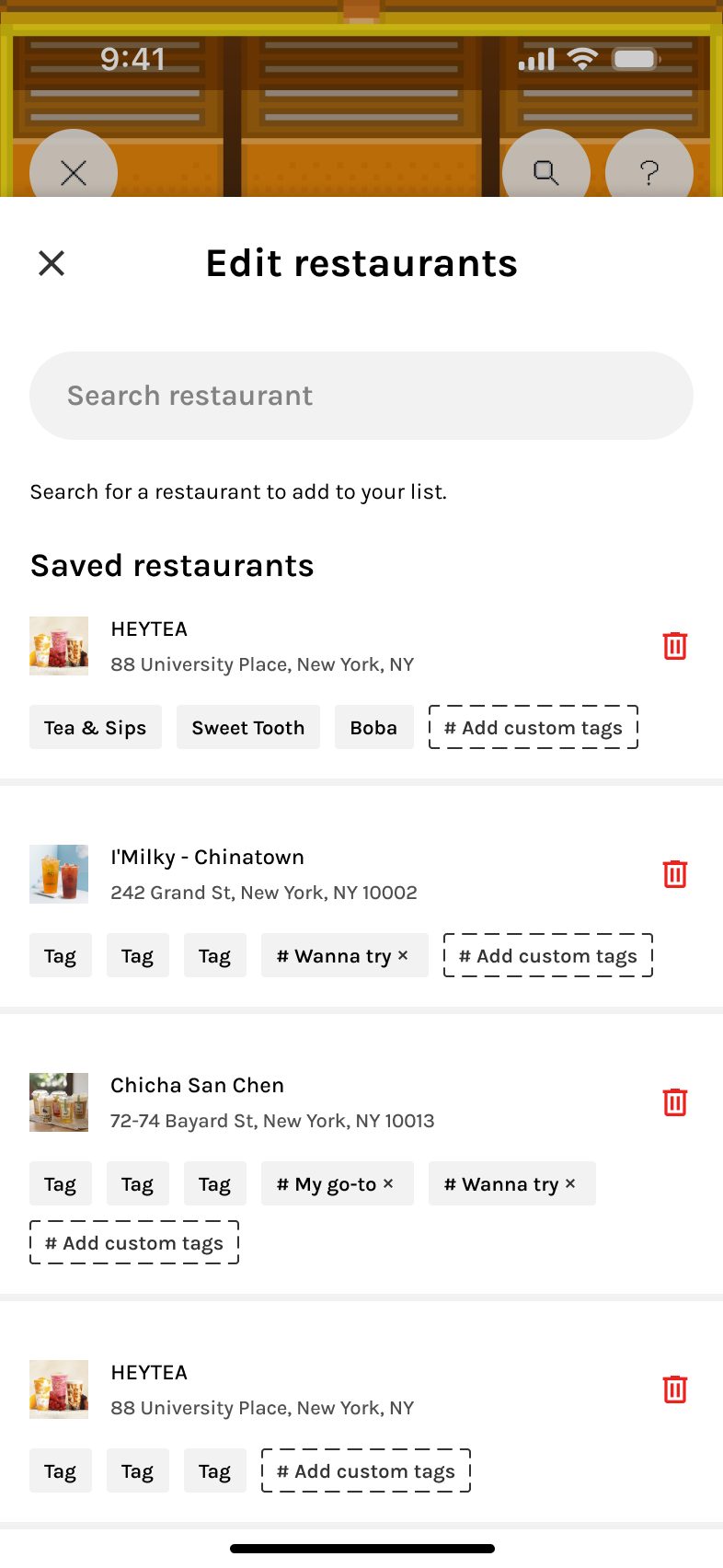
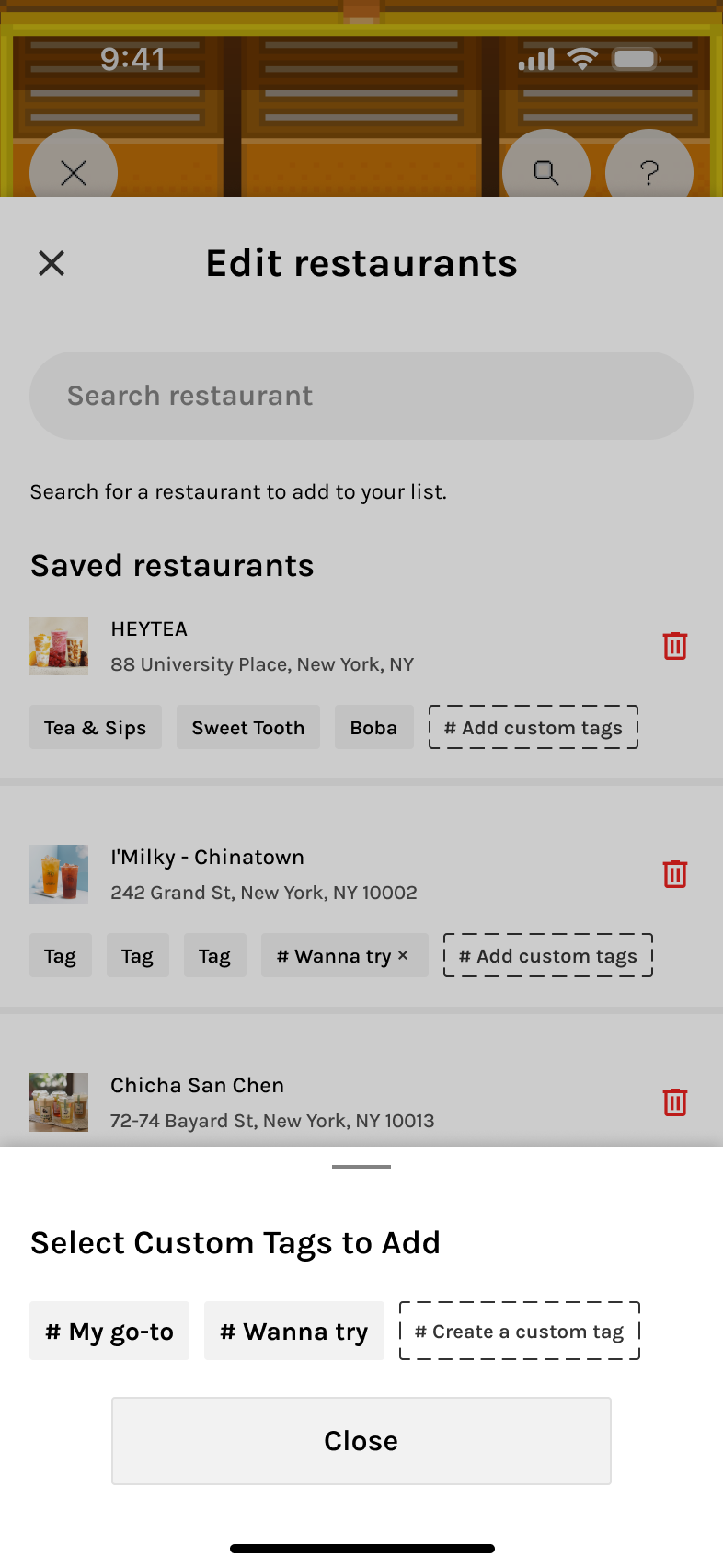
Edit restaurants

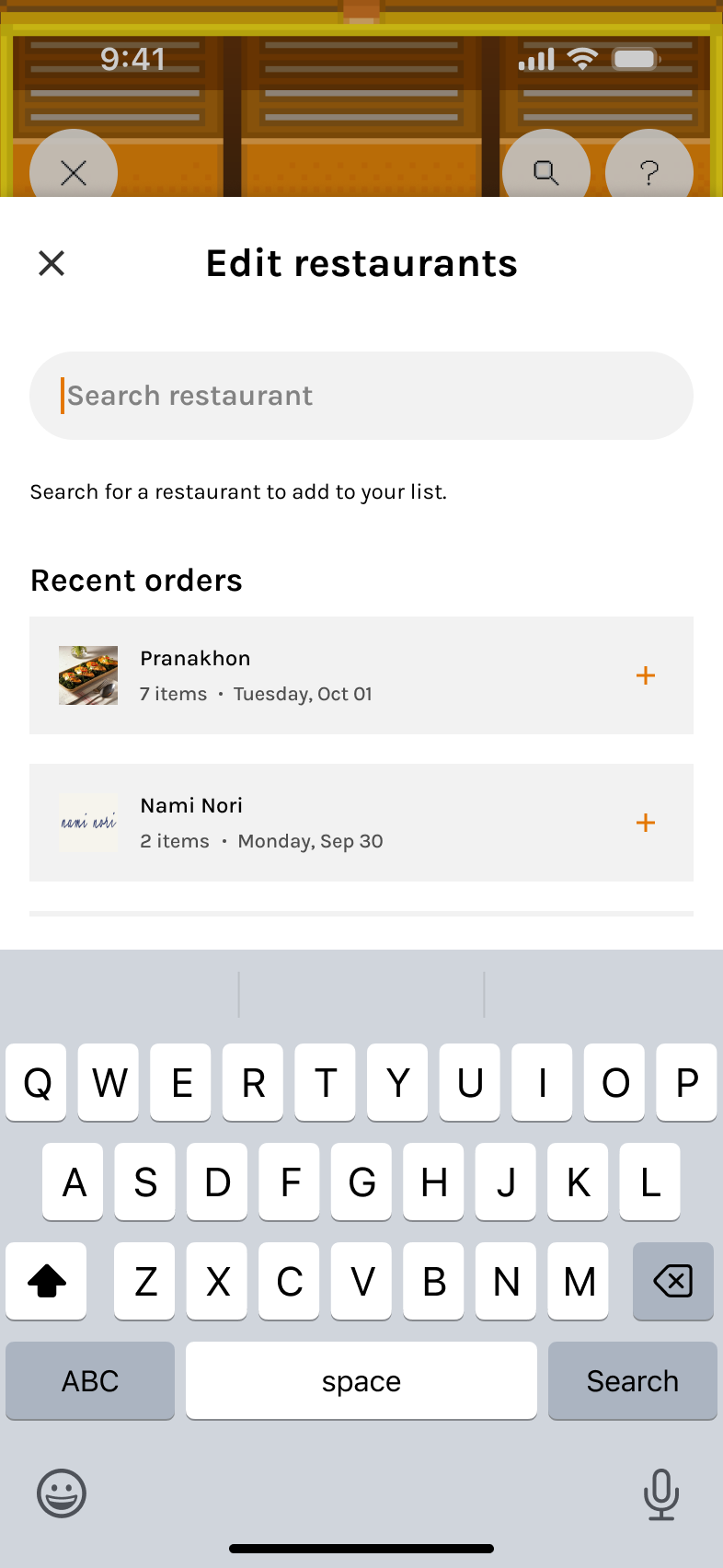
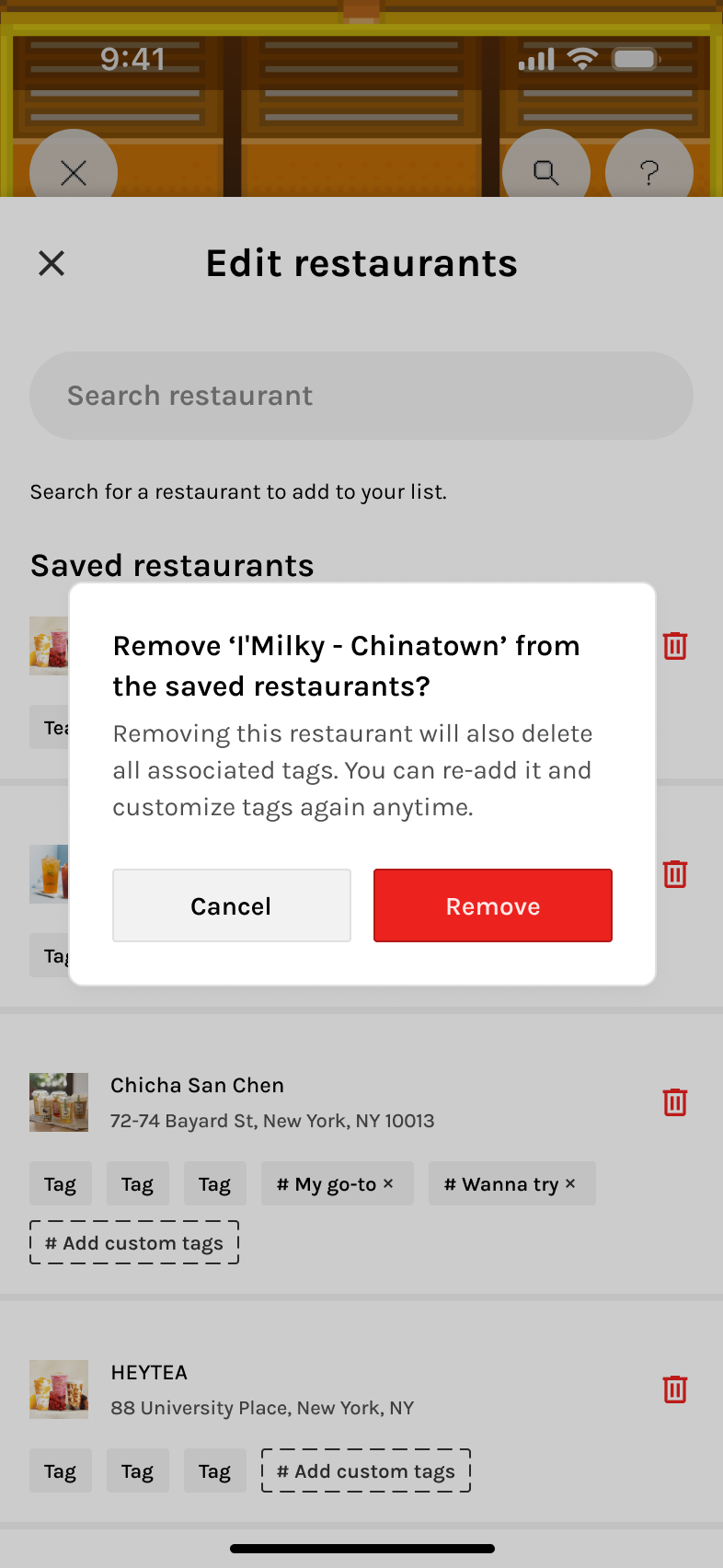
Add/remove restaurants

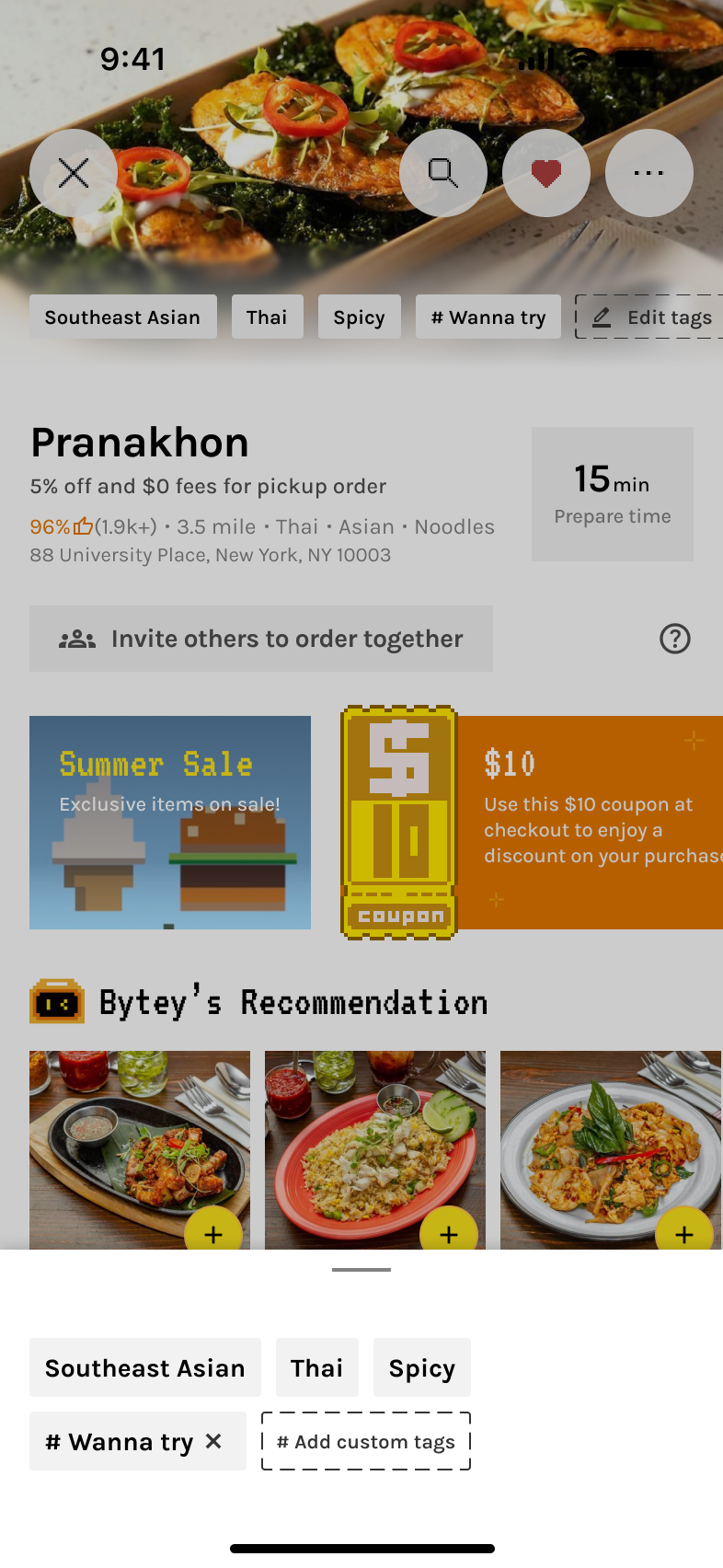
Add/create/remove custom tags

HOW WE GOT HERE?

Iteration 1/

My Fav

Establish a familiar and low-friction saving experience for restaurants.

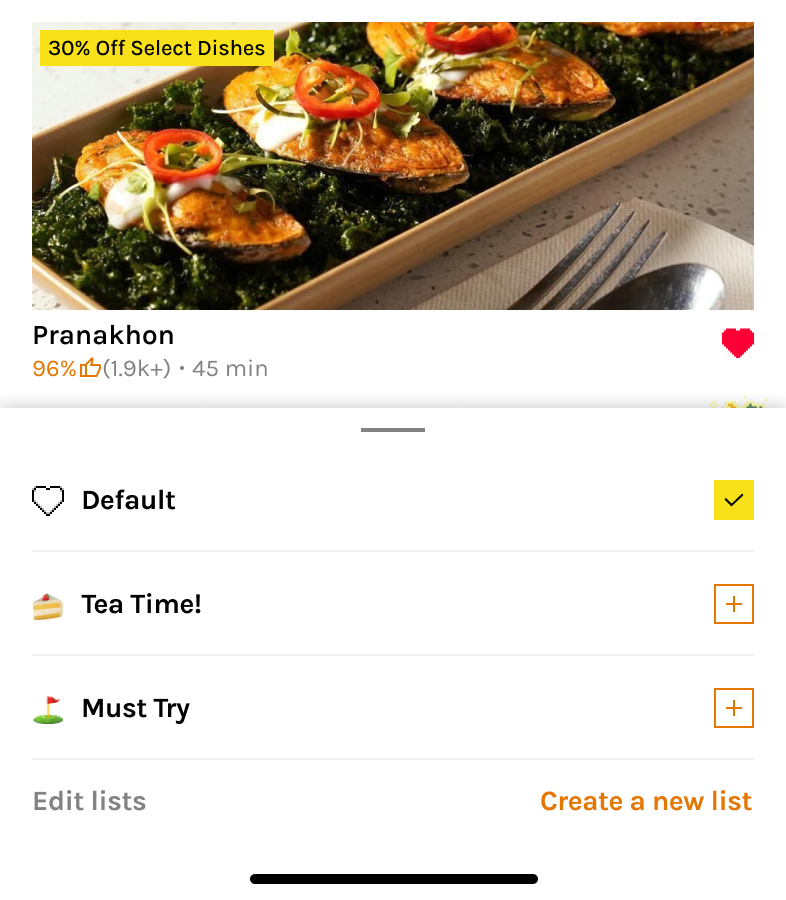
The original My Fav feature followed a familiar food app pattern: users tapped the heart icon to save a restaurant. It supported a basic need, but the experience remained shallow. Like many traditional bookmark systems, it depended almost entirely on manual organization, which meant most users either ignored it or only used it as a dumping ground.
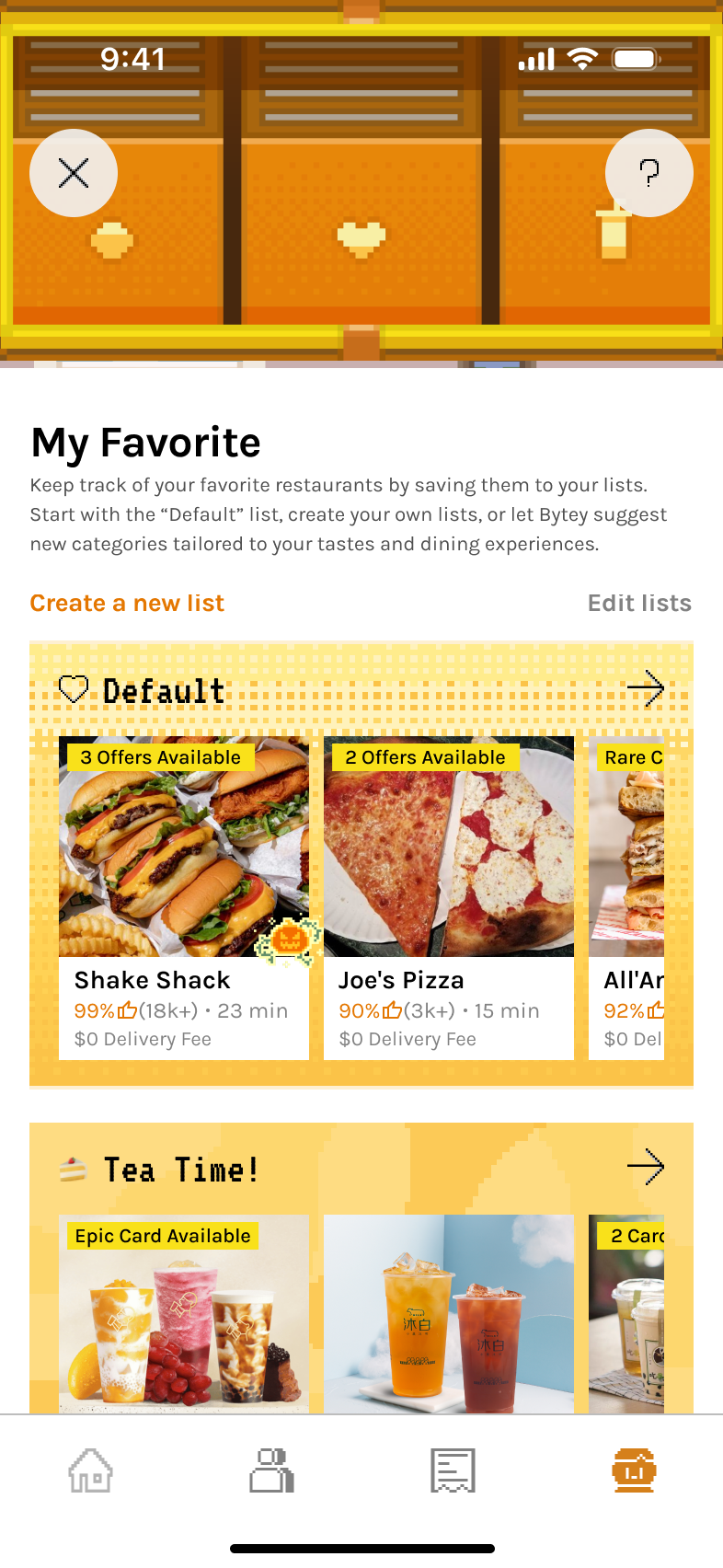
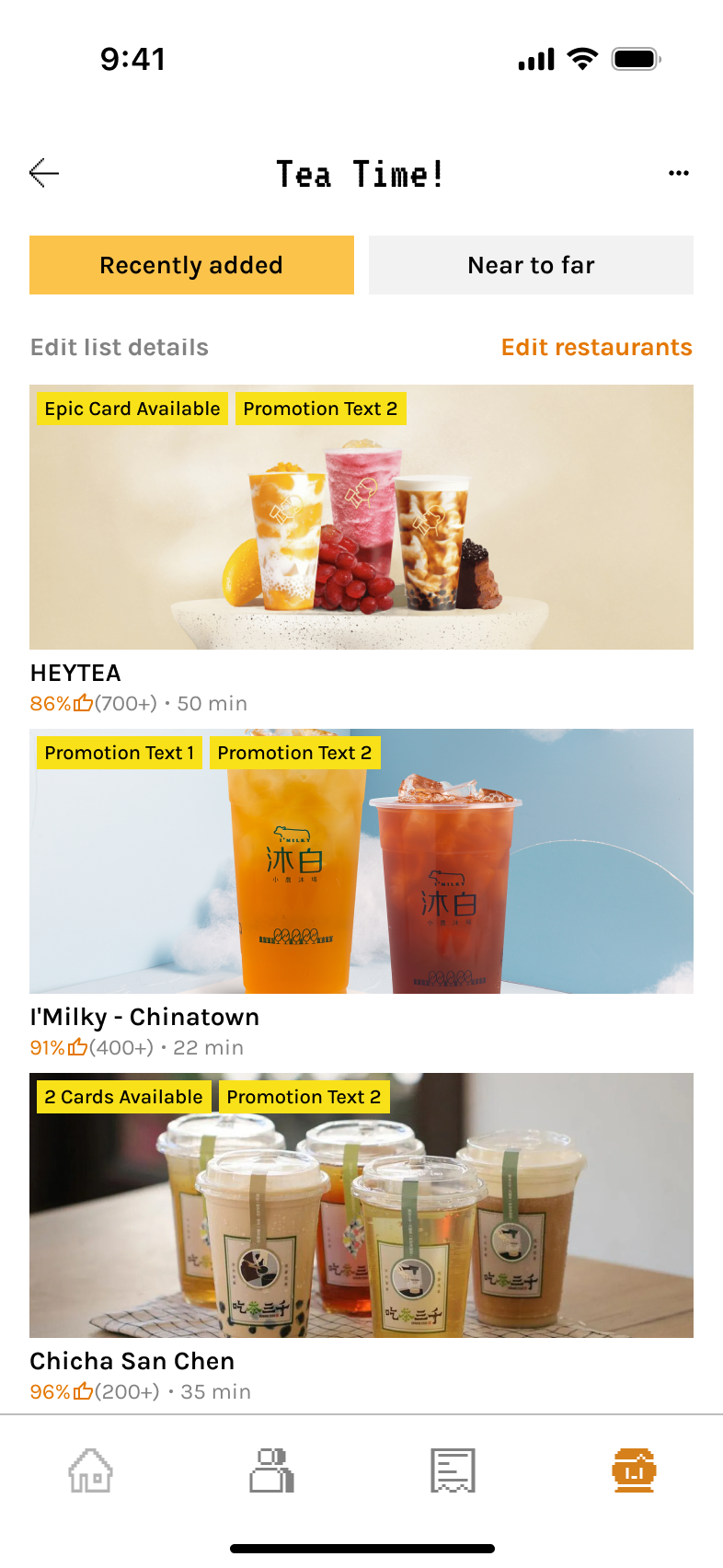
  • Kept the save interaction lightweight and familiar by using the standard heart/favorite pattern

  • Added basic user-created lists to give people a way to organize saved restaurants manually

  • Treated the feature as a supporting utility rather than a key discovery surface

✅ What Went Well

  • Easy to understand and use, as the save interaction matched familiar patterns from other food platforms and required almost no learning
  • Manual lists introduced an early signal that users wanted more structure than a single favorites page

‼ What Went Wrong

  • The system was not smart enough to support rediscovery well once users saved more restaurants
  • Creating and maintaining lists required too much manual effort for a casual mobile behavior
  • The value of saving was limited because restaurants were stored, but not meaningfully organized or surfaced later

➡️

Explore whether AI could reduce manual organization effort while keeping the interaction simple and intuitive on mobile

Iteration 2/

Collections

Make saved restaurants smarter and easier to organize through an AI-supported tag system.

By mid-2025, Bytey had shifted toward a more AI-first product direction. This exposed a gap in the traditional save feature: it was functional, but not intelligent. The team saw an opportunity to redesign the system so that saved restaurants could become easier to organize, easier to revisit, and more aligned with Bytey’s broader product vision.

To inform the redesign, I conducted a field study across saved-content systems in restaurant, bookmark, photo, and productivity apps, looking at how other products balanced AI automation, manual control, and trust. The study showed that hybrid models tend to work best: AI helps organize and surface content, while users retain lightweight editing power.

  • Reframed the feature from a simple favorites page into a broader collection system
  • Added AI-generated collections alongside user-created collections, using color to clearly distinguish the two types
  • Introduced an AI-supported tag system across all saved restaurants, allowing users to filter, organize, add custom tags, and save tag combinations as reusable groups

Trade-offs and ideas dropped:

  • Avoided full user-and-AI co-management of lists because it would be too heavy for a mobile-first experience
  • Chose not to build an overly flexible professional-style organization tool; the focus stayed on quick personal use and restaurant rediscovery

✅ What Went Well

  • The tag system created a clearer information architecture than manual lists alone
  • AI automation made the save feature feel more useful immediately after a restaurant was bookmarked
  • The experience supported two user types well:
    • casual users could simply save and browse
    • more engaged users could customize tags and save filter groups

‼ What Went Wrong

  • AI Smart Collections began to overlap with the tag system in both meaning and utility

➡️

Simplify the model so tags remain the core structure for saved restaurants, while AI-generated discovery is expressed in a more distinct form

Iteration 3 - Final /

Lists & Faves

Separate saved-content management from AI-driven restaurant discovery.

User testing showed that the tag system was already useful and intuitive enough for managing saved restaurants. At the same time, AI Smart Collections felt redundant because they were also based on saved content. To sharpen the experience, the feature evolved again into Lists & Faves.

This update separated two different needs:

  • managing saved restaurants
  • discovering restaurants passively through AI

Instead of generating “collections” from the same saved pool, AI Lists became a separate discovery layer inspired by music playlists. Unlike the earlier Smart Collections, these lists were not limited to saved restaurants. They became an AI-curated recommendation surface that users could follow, save from, and revisit.

  • Simplified saved-restaurant management by keeping tags and tag groups as the core structure for Faves
  • Removed AI Smart Collections from the saved-content system, since they overlapped too much with both manual collections and the tag-based model
  • Reframed AI Lists as a separate, auto-updating discovery layer based on behavior, tastes, priorities, time, events, and location

Trade-offs and ideas dropped:

  • Did not let users deeply co-edit AI Lists with the system, to avoid making list management too complex
  • Used a subscription-like AI curation model with auto-updating lists, so recommendations could evolve over time based on changing user interests, restaurant updates, and contextual signals, instead of behaving like fixed user-built folders

✅ What Went Well

  • The feature architecture became more legible
  • AI Lists filled an important product gap between direct search and community discovery
  • Bringing lists and favorites into one surface increased visibility of the feature and made it easier for users to move between recommendation and saving behaviors
  • The system aligned better with Bytey’s AI-first positioning without overcomplicating the UI

🌟 Future guidelines

  • Monitor whether users understand that AI Lists are AI-curated and auto-updated, and refine the messaging if confusion remains
  • The experience relied on strong recommendation logic, which required close collaboration with engineering to define useful list categories and scenarios

Outcome & Impact

15–25% Improve

Restaurant save rate

Users were more likely to save restaurants once the system reduced the fear of creating a messy, hard-to-manage favorites page

~30–45% to ~80–90% faster

Time to rediscover

Average time to locate a previously saved restaurant dropped meaningfully with tag filtering

Broader discovery support

AI Lists filled a key gap between direct search and community, giving users a lightweight way to discover restaurants when they did not know exactly what to search for

© ROY YANG 2026

All Rights Reserved

Product Design

BYTEY - Lists & Faves

This feature reimagined a standard “save/favorite” pattern into a smarter, AI-supported system for organizing and rediscovering restaurants. What began as a simple bookmark function evolved into a lightweight mobile experience where AI helps structure saved content, while users still keep meaningful control.

Smarter saving

Transformed a passive “heart to save” feature into a smarter system for saving, filtering, and rediscovering restaurants

Flexible organization

Introduced a tag based system (AI-generated tags, user-created tags, and tag groups) with AI-curated lists to support both everyday and power users

Mobile-first simplicity

Focused on balancing intelligence and simplicity on mobile, without turning a casual feature into a heavy management tool

Lists & Faves home

Lists & Faves scrolled

Show all lists

View list

Map view

Show all tags

Manage custom tags

Create/edit tag groups

Edit restaurants

Add/remove restaurants

Add/create/remove custom tags

HOW WE GOT HERE?

Iteration 1/

My Fav

Establish a familiar and low-friction saving experience for restaurants.

The original My Fav feature followed a familiar food app pattern: users tapped the heart icon to save a restaurant. It supported a basic need, but the experience remained shallow. Like many traditional bookmark systems, it depended almost entirely on manual organization, which meant most users either ignored it or only used it as a dumping ground.
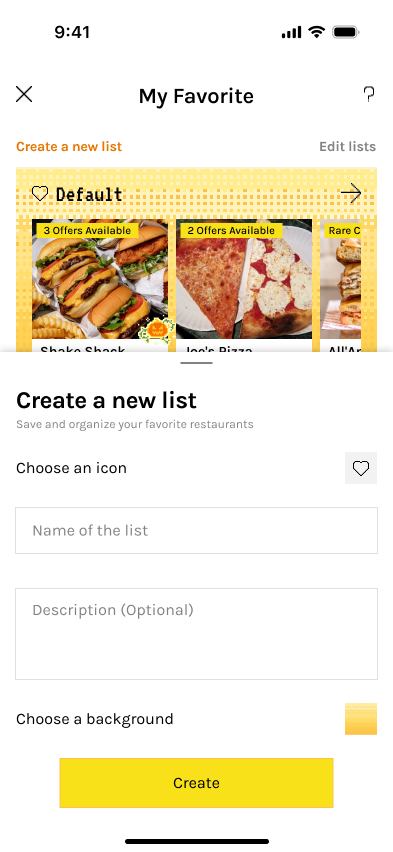
  • Kept the save interaction lightweight and familiar by using the standard heart/favorite pattern

  • Added basic user-created lists to give people a way to organize saved restaurants manually

  • Treated the feature as a supporting utility rather than a key discovery surface

✅ What Went Well

  • Easy to understand and use, as the save interaction matched familiar patterns from other food platforms and required almost no learning
  • Manual lists introduced an early signal that users wanted more structure than a single favorites page

‼ What Went Wrong

  • The system was not smart enough to support rediscovery well once users saved more restaurants
  • Creating and maintaining lists required too much manual effort for a casual mobile behavior
  • The value of saving was limited because restaurants were stored, but not meaningfully organized or surfaced later

➡️

Explore whether AI could reduce manual organization effort while keeping the interaction simple and intuitive on mobile

Iteration 2/

Collections

Make saved restaurants smarter and easier to organize through an AI-supported tag system.

By mid-2025, Bytey had shifted toward a more AI-first product direction. This exposed a gap in the traditional save feature: it was functional, but not intelligent. The team saw an opportunity to redesign the system so that saved restaurants could become easier to organize, easier to revisit, and more aligned with Bytey’s broader product vision.

To inform the redesign, I conducted a field study across saved-content systems in restaurant, bookmark, photo, and productivity apps, looking at how other products balanced AI automation, manual control, and trust. The study showed that hybrid models tend to work best: AI helps organize and surface content, while users retain lightweight editing power.

  • Reframed the feature from a simple favorites page into a broader collection system
  • Added AI-generated collections alongside user-created collections, using color to clearly distinguish the two types
  • Introduced an AI-supported tag system across all saved restaurants, allowing users to filter, organize, add custom tags, and save tag combinations as reusable groups

Trade-offs and ideas dropped:

  • Avoided full user-and-AI co-management of lists because it would be too heavy for a mobile-first experience
  • Chose not to build an overly flexible professional-style organization tool; the focus stayed on quick personal use and restaurant rediscovery

✅ What Went Well

  • The tag system created a clearer information architecture than manual lists alone
  • AI automation made the save feature feel more useful immediately after a restaurant was bookmarked
  • The experience supported two user types well:
    • casual users could simply save and browse
    • more engaged users could customize tags and save filter groups

‼ What Went Wrong

  • AI Smart Collections began to overlap with the tag system in both meaning and utility

➡️

Simplify the model so tags remain the core structure for saved restaurants, while AI-generated discovery is expressed in a more distinct form

Iteration 3 - Final /

Lists & Faves

Separate saved-content management from AI-driven restaurant discovery.

User testing showed that the tag system was already useful and intuitive enough for managing saved restaurants. At the same time, AI Smart Collections felt redundant because they were also based on saved content. To sharpen the experience, the feature evolved again into Lists & Faves.

This update separated two different needs:

  • managing saved restaurants
  • discovering restaurants passively through AI

Instead of generating “collections” from the same saved pool, AI Lists became a separate discovery layer inspired by music playlists. Unlike the earlier Smart Collections, these lists were not limited to saved restaurants. They became an AI-curated recommendation surface that users could follow, save from, and revisit.

  • Simplified saved-restaurant management by keeping tags and tag groups as the core structure for Faves
  • Removed AI Smart Collections from the saved-content system, since they overlapped too much with both manual collections and the tag-based model
  • Reframed AI Lists as a separate, auto-updating discovery layer based on behavior, tastes, priorities, time, events, and location

Trade-offs and ideas dropped:

  • Did not let users deeply co-edit AI Lists with the system, to avoid making list management too complex
  • Used a subscription-like AI curation model with auto-updating lists, so recommendations could evolve over time based on changing user interests, restaurant updates, and contextual signals, instead of behaving like fixed user-built folders

✅ What Went Well

  • The feature architecture became more legible
  • AI Lists filled an important product gap between direct search and community discovery
  • Bringing lists and favorites into one surface increased visibility of the feature and made it easier for users to move between recommendation and saving behaviors
  • The system aligned better with Bytey’s AI-first positioning without overcomplicating the UI

🌟 Future guidelines

  • Monitor whether users understand that AI Lists are AI-curated and auto-updated, and refine the messaging if confusion remains
  • The experience relied on strong recommendation logic, which required close collaboration with engineering to define useful list categories and scenarios

Outcome & Impact

15–25% Improve

Restaurant save rate

Users were more likely to save restaurants once the system reduced the fear of creating a messy, hard-to-manage favorites page

~30–45% to ~80–90% faster

Time to rediscover

Average time to locate a previously saved restaurant dropped meaningfully with tag filtering

Broader discovery support

AI Lists filled a key gap between direct search and community, giving users a lightweight way to discover restaurants when they did not know exactly what to search for

© ROY YANG 2026 All Rights Reserved

Product Design

BYTEY - Lists & Faves

This feature reimagined a standard “save/favorite” pattern into a smarter, AI-supported system for organizing and rediscovering restaurants. What began as a simple bookmark function evolved into a lightweight mobile experience where AI helps structure saved content, while users still keep meaningful control.

Smarter saving

Transformed a passive “heart to save” feature into a smarter system for saving, filtering, and rediscovering restaurants

Flexible organization

Introduced a tag based system (AI-generated tags, user-created tags, and tag groups) with AI-curated lists to support both everyday and power users

Mobile-first simplicity

Focused on balancing intelligence and simplicity on mobile, without turning a casual feature into a heavy management tool

Lists & Faves home

Lists & Faves scrolled

Show all lists

View list

Map view

Show all tags

Manage custom tags

Create/edit tag groups

Edit restaurants

Add/remove restaurants

Add/create/remove custom tags

HOW WE GOT HERE?

Iteration 1/

My Fav

Establish a familiar and low-friction saving experience for restaurants.

The original My Fav feature followed a familiar food app pattern: users tapped the heart icon to save a restaurant. It supported a basic need, but the experience remained shallow. Like many traditional bookmark systems, it depended almost entirely on manual organization, which meant most users either ignored it or only used it as a dumping ground.
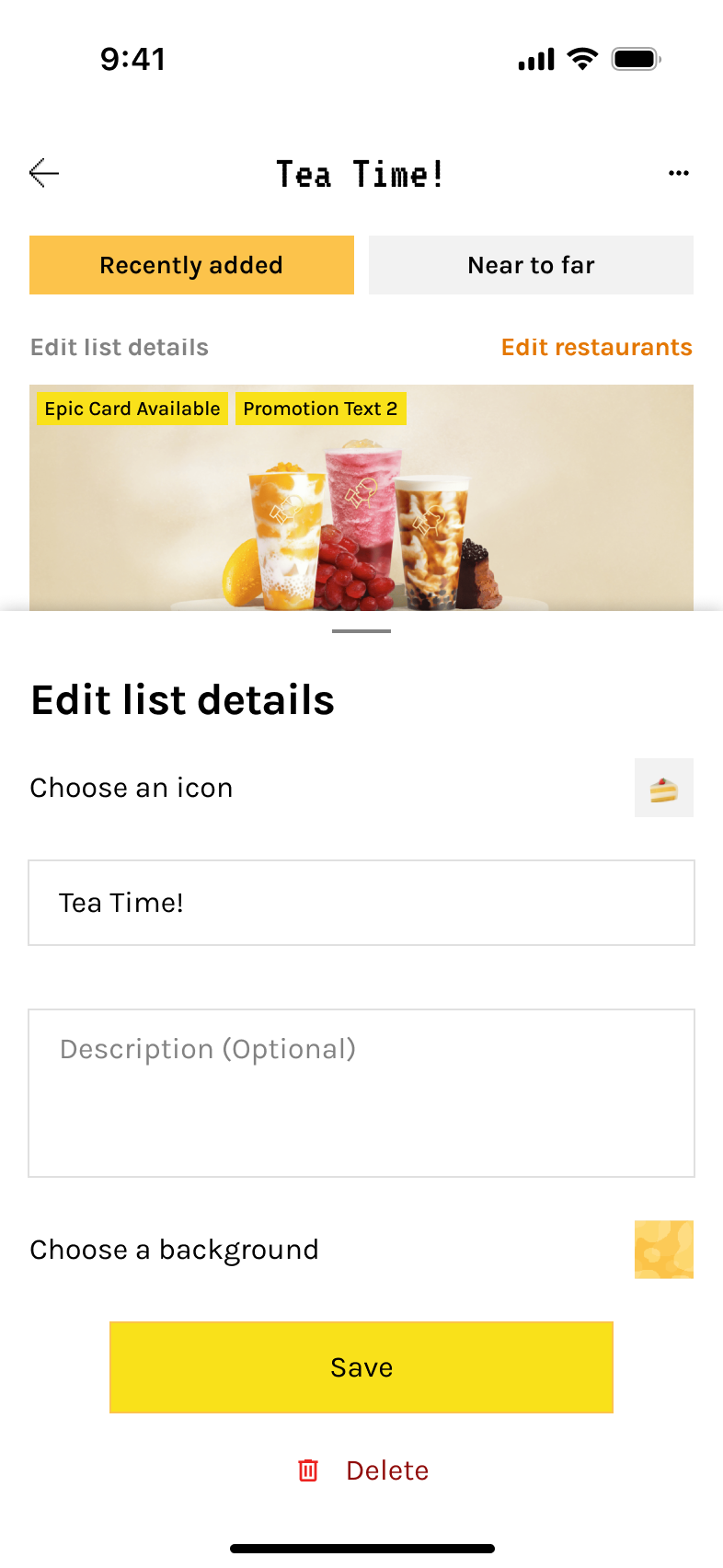
  • Kept the save interaction lightweight and familiar by using the standard heart/favorite pattern

  • Added basic user-created lists to give people a way to organize saved restaurants manually

  • Treated the feature as a supporting utility rather than a key discovery surface

✅ What Went Well

  • Easy to understand and use, as the save interaction matched familiar patterns from other food platforms and required almost no learning
  • Manual lists introduced an early signal that users wanted more structure than a single favorites page

‼ What Went Wrong

  • The system was not smart enough to support rediscovery well once users saved more restaurants
  • Creating and maintaining lists required too much manual effort for a casual mobile behavior
  • The value of saving was limited because restaurants were stored, but not meaningfully organized or surfaced later

➡️

Explore whether AI could reduce manual organization effort while keeping the interaction simple and intuitive on mobile

Iteration 2/

Collections

Make saved restaurants smarter and easier to organize through an AI-supported tag system.

By mid-2025, Bytey had shifted toward a more AI-first product direction. This exposed a gap in the traditional save feature: it was functional, but not intelligent. The team saw an opportunity to redesign the system so that saved restaurants could become easier to organize, easier to revisit, and more aligned with Bytey’s broader product vision.

To inform the redesign, I conducted a field study across saved-content systems in restaurant, bookmark, photo, and productivity apps, looking at how other products balanced AI automation, manual control, and trust. The study showed that hybrid models tend to work best: AI helps organize and surface content, while users retain lightweight editing power.
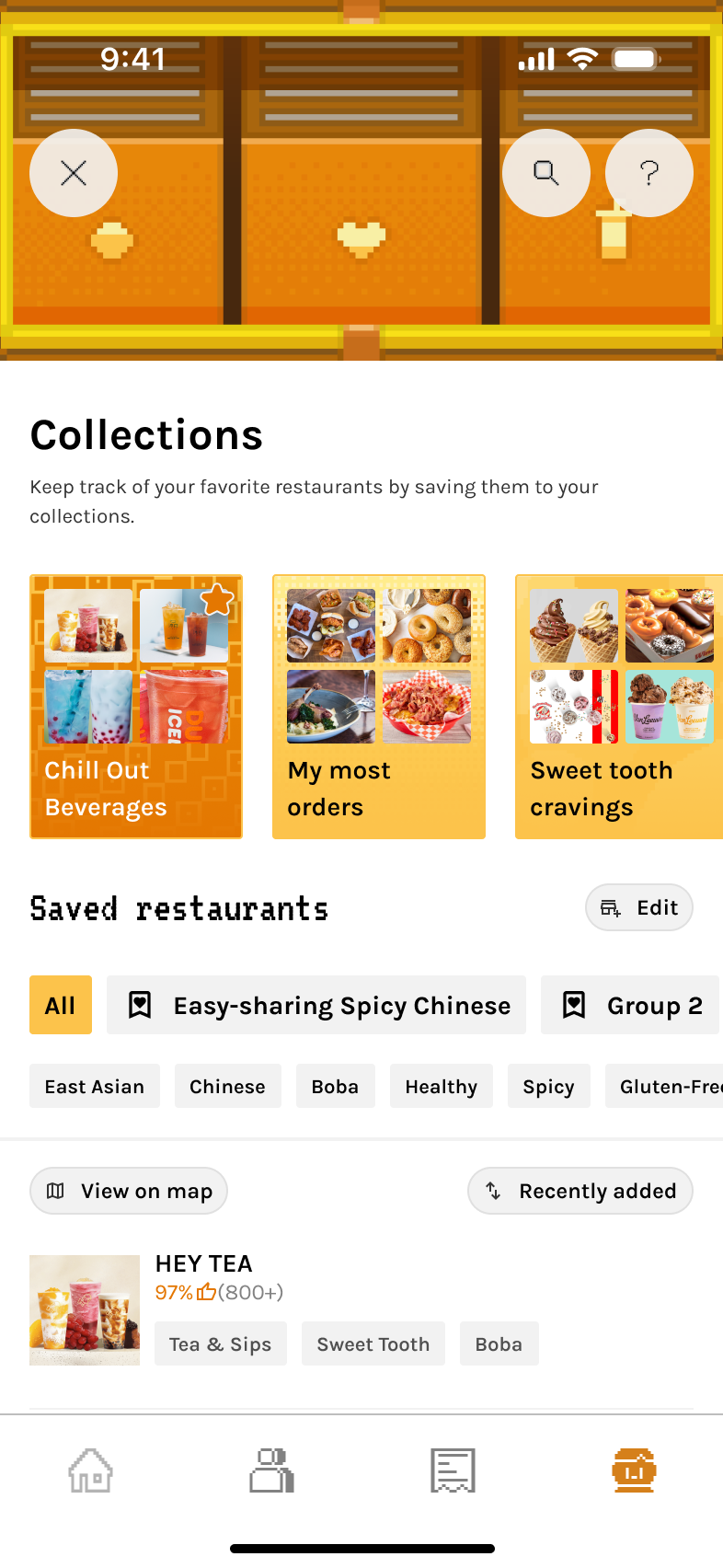
  • Reframed the feature from a simple favorites page into a broader collection system
  • Added AI-generated collections alongside user-created collections, using color to clearly distinguish the two types
  • Introduced an AI-supported tag system across all saved restaurants, allowing users to filter, organize, add custom tags, and save tag combinations as reusable groups

Trade-offs and ideas dropped:

  • Avoided full user-and-AI co-management of lists because it would be too heavy for a mobile-first experience
  • Chose not to build an overly flexible professional-style organization tool; the focus stayed on quick personal use and restaurant rediscovery

✅ What Went Well

  • The tag system created a clearer information architecture than manual lists alone
  • AI automation made the save feature feel more useful immediately after a restaurant was bookmarked
  • The experience supported two user types well:
    • casual users could simply save and browse
    • more engaged users could customize tags and save filter groups

‼ What Went Wrong

  • AI Smart Collections began to overlap with the tag system in both meaning and utility

➡️

Simplify the model so tags remain the core structure for saved restaurants, while AI-generated discovery is expressed in a more distinct form

Iteration 3 - Final /

Lists & Faves

Separate saved-content management from AI-driven restaurant discovery.

User testing showed that the tag system was already useful and intuitive enough for managing saved restaurants. At the same time, AI Smart Collections felt redundant because they were also based on saved content. To sharpen the experience, the feature evolved again into Lists & Faves.

This update separated two different needs:

  • managing saved restaurants
  • discovering restaurants passively through AI

Instead of generating “collections” from the same saved pool, AI Lists became a separate discovery layer inspired by music playlists. Unlike the earlier Smart Collections, these lists were not limited to saved restaurants. They became an AI-curated recommendation surface that users could follow, save from, and revisit.

  • Simplified saved-restaurant management by keeping tags and tag groups as the core structure for Faves
  • Removed AI Smart Collections from the saved-content system, since they overlapped too much with both manual collections and the tag-based model
  • Reframed AI Lists as a separate, auto-updating discovery layer based on behavior, tastes, priorities, time, events, and location

Trade-offs and ideas dropped:

  • Did not let users deeply co-edit AI Lists with the system, to avoid making list management too complex
  • Used a subscription-like AI curation model with auto-updating lists, so recommendations could evolve over time based on changing user interests, restaurant updates, and contextual signals, instead of behaving like fixed user-built folders

✅ What Went Well

  • The feature architecture became more legible
  • AI Lists filled an important product gap between direct search and community discovery
  • Bringing lists and favorites into one surface increased visibility of the feature and made it easier for users to move between recommendation and saving behaviors
  • The system aligned better with Bytey’s AI-first positioning without overcomplicating the UI

🌟 Future guidelines

  • Monitor whether users understand that AI Lists are AI-curated and auto-updated, and refine the messaging if confusion remains
  • The experience relied on strong recommendation logic, which required close collaboration with engineering to define useful list categories and scenarios

Outcome & Impact

15–25% Improve

Restaurant save rate

Users were more likely to save restaurants once the system reduced the fear of creating a messy, hard-to-manage favorites page

~30–45% to ~80–90% faster

Time to rediscover

Average time to locate a previously saved restaurant dropped meaningfully with tag filtering

Broader discovery support

AI Lists filled a key gap between direct search and community, giving users a lightweight way to discover restaurants when they did not know exactly what to search for

© ROY YANG 2026 All Rights Reserved